
The Seasons of Life: An Anchor, a Universe, a Light, and a Sky

Some stories are not written with words. They are written through changing seasons, unexpected storms, quiet sacrifices, and the love that holds a family together.

A November Memory

Four years ago, in November, I walked through the beautiful autumn streets of London, surrounded by falling leaves and the colors of a season that has always held a special place in my heart. At the time, they were simply photographs capturing beautiful moments during a visit. But looking at them today, I see something much deeper. Every falling leaf reminds me of a passing year, every changing color brings back a memory, and every quiet moment takes me through the journey of a family that has grown through love, happiness, sorrow, and countless new beginnings.

Praveena In London#PraveenaAneNenu
A November afternoon in London, where the falling leaves captured a beautiful moment, unaware of the memories they would awaken years later.

These photographs may belong to one November in London, but the memories they awaken belong to a lifetime.

And this is where the story begins.

There is something about November that brings memories closer to the heart. Perhaps it is the changing colors of the leaves, the gentle chill in the air, or the way autumn makes us look back at the years that have passed. As the leaves turn golden and slowly find their way to the ground, they remind us that life is constantly changing, that every season has its own purpose, and that even the most beautiful things must sometimes change to make room for something new.

Every family has a story, but not every story begins with a grand celebration or a perfect plan. Some begin quietly, with two individuals whose paths cross at just the right moment, unaware that their meeting will eventually become the foundation of an entire world.

This particular story began in November, when the first chapter of a family was written. There was an Anchor, steady and grounded, and a Universe, filled with dreams, emotions, curiosity, and endless possibilities. They came from different journeys, carrying their own experiences and expectations, without knowing how deeply their lives would become connected.

March brought another meaningful turn in their story, and by May, the Anchor and the Universe had joined hands to begin a life together. They did not have all the answers, nor could they see everything waiting for them along the road, but they had something far more important than certainty. They had the willingness to build a future together, to learn from one another, and to face whatever life placed before them.

Their journey took them far beyond the places they had once called home. A new country welcomed them with unfamiliar surroundings, different ways of living, and countless things to learn. Then came another move, another state, another beginning, and the challenge of building a life while continuing their education and pursuing their dreams.

Those years were filled with responsibilities, adjustments, hard work, and the quiet sacrifices that rarely become part of the stories people tell. There were days when everything seemed possible and others when even the smallest progress required enormous patience. Yet through it all, the Anchor and the Universe were learning one of life’s most valuable lessons: a home is not defined by the country we live in, the house we own, or the things we accumulate, but by the love, trust, and understanding we build within it.

Slowly, life began to find its rhythm. There were ordinary mornings, busy afternoons, conversations about tomorrow, small celebrations, shared dreams, and moments of laughter that made even the most tiring days worthwhile. From the outside, it was simply another happy family building a future, much like the countless families we see around us every day.

But happiness, however beautiful, does not come with a promise that sorrow will never knock on the door.

Sometimes life sends an unexpected wind, one that arrives without warning and changes the direction of everything we thought we understood. It does not wait until we are ready, nor does it consider how carefully we have built our dreams. It simply blows through our world, shaking the strongest branches and carrying away pieces of happiness that we believed would remain forever.

For the Anchor and the Universe, such a wind arrived, leaving behind a silence that neither had imagined. There are certain sorrows that cannot be measured in words, experiences that change the way we look at life and leave memories that time may soften but never completely erase.

Even the strongest Anchor can feel shaken, and even a Universe filled with countless stars can experience moments of darkness. Yet somewhere within that darkness, the smallest hope can begin to grow, quietly reminding us that the story of life is not finished simply because one chapter has been painful.

And then, when life seemed to need a little magic, a Light arrived.

A beautiful, precious Light that brought warmth into the family and slowly filled its days with a happiness that felt both new and deeply comforting. This Light did not come to erase sorrow or replace anything that had been lost, because love does not work that way. Instead, the Light brought a new reason to smile, another reason to believe in tomorrow, and the gentle reminder that even after difficult seasons, life still has the power to surprise us with extraordinary blessings.

The unexpected wind that had once shaken their world could not extinguish this Light. Its presence gave the Anchor renewed strength and filled the Universe with colors that seemed to have been waiting patiently to return.

Praveena In London#PraveenaAneNenu
Every leaf has its season, every season has its story, and every story carries a little light that never truly fades.

There was laughter again, a different kind of excitement in the home, and countless little moments that became precious without anyone realizing their importance. Every new discovery, every small achievement, and every passing day became part of a beautiful journey that the Anchor and the Universe wanted to hold close forever.

But time has its own way of moving, never asking us whether we are ready for the next chapter.

Days became months, months turned into years, and the years passed so quickly that it sometimes felt as though an entire season had disappeared in the blink of an eye. The little Light continued to grow, bringing new adventures, questions, dreams, and responsibilities, while the Anchor and the Universe discovered that raising a family meant growing alongside it.

They began to understand that love was not simply about creating happiness. It was also about protecting it, nurturing it, and giving it enough freedom to discover its own strength.

A Light needs warmth and care, but it also needs space to shine. It needs a world where it can grow without fear, where dreams can stretch beyond familiar boundaries, and where even the most difficult days are met with understanding and encouragement.

Perhaps life understood that the growing Light deserved something more, something peaceful and limitless, something that could share its journey while bringing another kind of happiness into the family.

And then came the Sky.

Quiet, gentle, and beautiful in a way that was entirely its own, the Sky arrived like another blessing, bringing a sense of calm and completeness to a family that had already traveled through so many seasons.

The Sky was never meant to take the Light’s place, just as the Light had never been meant to replace the happiness that came before. Each carried a different kind of magic, a different personality, and a different purpose within the family.

The Light brought its own brightness, and the Sky brought its own peaceful wonder. Together, they filled the home with two kinds of happiness, reminding the Anchor and the Universe that love does not become smaller when it is shared. It grows, expands, and finds new ways to make room for everyone.

There were now two beautiful lives to nurture, two different worlds to understand, and countless dreams waiting to unfold. The Anchor and the Universe knew that they could not protect the Light and the Sky from every difficulty the future might bring, but they could give them something lasting: strong roots, the confidence to stand on their own, and the certainty that they would always have a place where they belonged.

As the family grew, life continued in its familiar, beautiful, imperfect way. There were school days, celebrations, responsibilities, disagreements, laughter, lessons, and countless conversations that would one day become memories. There were moments of pride and moments of worry, days filled with excitement and days when simply being together was enough.

To the outside world, they were an ordinary family living an ordinary life. But perhaps that is where the greatest beauty of family truly exists, not in extraordinary events or perfect photographs, but in the everyday moments that quietly build a lifetime of love.

A family is not held together because everyone thinks alike or because life always moves according to plan. It is held together through patience when understanding is difficult, forgiveness when mistakes are made, encouragement when confidence begins to fade, and the willingness to remain connected even as each person grows into someone different.

The Anchor continued to provide strength, the Universe continued to hold countless dreams and emotions, the Light found new ways to shine, and the Sky began stretching toward its own horizons.

And just like that, another year passed, and then another.

The seasons continued their familiar dance. Spring arrived with new beginnings, summer brought warmth and energy, autumn painted the world in beautiful colors, and winter reminded everyone that even the quietest days have something to teach us.

Praveena In London#PraveenaAneNenu
Four years have passed since this November in London, yet some moments remain untouched by time, quietly reminding us how far life has carried us.

With every passing season, the family changed. The little ones were no longer quite so little, the dreams that once seemed distant began taking shape, and the Anchor and the Universe slowly realized that the years they had once imagined were becoming the memories they now treasured.

There is something both beautiful and bittersweet about watching a family grow. We spend so much of our lives looking forward to the next milestone, the next achievement, the next celebration, that we sometimes forget to appreciate the ordinary day unfolding right in front of us.

We wait for the children to grow, and then wish we could hold on to their childhood a little longer. We work hard to build a comfortable future, only to discover that some of our happiest memories came from the simplest days when we had very little except one another.

Perhaps that is one of life’s greatest lessons. Happiness is not something waiting for us at the end of a long journey. It is scattered throughout the journey itself, hidden in familiar voices, shared meals, unexpected laughter, warm embraces, and the quiet comfort of knowing that somewhere in this enormous world, there are people who call us family.

And now November has returned.

The leaves are changing colors again, and the autumn breeze carries the same familiar reminder that nothing in life remains exactly as it was. The trees release their leaves without knowing what the next season will bring, yet their roots remain firmly planted, trusting that spring will eventually return.

A family is much like those trees. Its branches grow in different directions, its leaves change with the seasons, and sometimes unexpected winds test its strength. But when its roots are built on love, trust, sacrifice, and understanding, it can continue growing through even the most difficult seasons.

The Anchor may grow older, the Universe may carry more memories, the Light may discover new places to shine, and the Sky may stretch toward possibilities that no one can yet imagine. Their paths may not always remain close, and life may lead them toward different dreams, but the bond that connects them can remain stronger than distance, time, or change.

Because the purpose of a family is not to keep everyone in the same place forever. It is to give each person enough love to grow, enough courage to explore, and enough confidence to know that wherever life takes them, they will never be without roots.

The story that began in November was never about creating a perfect life. It was about two people learning to build something meaningful together, discovering strength through unexpected sorrow, welcoming happiness when it returned, and watching that happiness grow into two beautiful lives.

It was about an Anchor who stood steady through changing tides, a Light that reminded the family of hope, and a Sky that brought another beautiful dimension to their world.

And it was about a Universe that held all these seasons within her, carrying the memories of where the journey began, the pain of the storms, the joy of new beginnings, and the quiet gratitude that comes from looking back and realizing how much love has filled the years.

There will be more autumns, more changing leaves, more milestones, and perhaps more unexpected winds. No one knows what the coming seasons will bring, but the most important thing is not being able to predict the future. It is knowing that the love built through the years has given everyone the strength to face it.

As the autumn leaves drift gently through the air, this story may sound like the story of any family. A story of two people who began with dreams, traveled through unfamiliar places, faced unexpected sorrow, and found their greatest happiness in the lives they created together.

But every word carries a memory, every season holds an emotion, and every chapter belongs to a journey that is still being written.

Praveena In London #PraveenaAneNenu
Among the changing colors of autumn, a Universe pauses to appreciate the seasons she has lived, the storms she has weathered, and the love that makes her world complete.

And perhaps it is time to reveal why this story feels so close to the heart.

I have watched the Anchor stand strong when life was uncertain. I have felt the warmth of the Light when the world seemed dark, and I have watched the Sky bring its own quiet beauty into our lives. I have lived through the changing seasons, carried the memories of the unexpected winds, and treasured the happiness that followed.

This is not simply a story I heard, or a family I watched from a distance. This is the life I have lived, the love I have carried, and the family that means everything to me.


I am the Universe.

And if there is one thing all these seasons have taught me, it is that a Universe is not made beautiful by the number of stars it holds, but by the love that gives those stars a place to shine.

My Anchor, my Light, and my Sky are the most beautiful parts of mine.

And that is RP Family.

One Pumpkin, Two Cultures, and the Mystery of the Evil Eye

An October reflection on Halloween, Indian Drishti traditions, a few strange coincidences, and two familiar faces with a spooky twist.

October is here, and pumpkins are everywhere!

Every grocery store, every neighborhood, every front porch seems to have one. Some are beautifully carved, some have scary faces, and some are just sitting there looking pretty. Then there are the skeletons hanging from trees, ghosts floating in front yards, and houses decorated as though someone is preparing to welcome an entire ghost family.

After living in America for so many years, I have gotten used to Halloween. I enjoy watching how creative people get with their decorations. But this year, looking at all those pumpkins, something funny crossed my mind.

In America, people put pumpkins outside their houses for Halloween. Back in India, we also put pumpkins outside our houses, but for Drishti!

Same pumpkin, completely different purpose.

Isn’t that something?

In some Telugu households, we hang a pumpkin in front of the house to ward off the evil eye. We also have a tradition of rotating a pumpkin as part of a ritual to remove Drishti.

Here in America, people carve scary faces into pumpkins and put lights inside them. Back in India, we have our own frightening-looking Dishti Bommalu outside houses and buildings.

I started wondering how two cultures, thousands of miles apart, ended up using pumpkins in such interesting ways.

And then I remembered something that happened recently at my house.

But before I tell you about my tea — yes, this story involves my tea! — I wanted to understand where Halloween actually came from.

So, Where Did Halloween Come From?

Growing up in India, Halloween wasn’t something we celebrated. We had plenty of our own festivals, traditions, and stories about spirits. Halloween was something I came to know more about after living in America.

Today, it is all about costumes, candy, pumpkins, and decorations. But Halloween has a much older history.

One of its important historical roots is the ancient Celtic festival called Samhain, celebrated more than 2,000 years ago in parts of what are now Ireland and Britain.

Samhain marked the end of the harvest season and the beginning of winter.

Think about life back then. No electricity, no heaters, no grocery stores where you could buy whatever you needed. Winter meant darkness, cold weather, and uncertainty.

In later accounts of Celtic traditions, Samhain was associated with the belief that the boundary between the living and the spirit world became thinner around this time of year.

People had stories and rituals connected to spirits and the unknown.

As Christianity spread, older seasonal traditions interacted with Christian observances. November 1 became associated with All Saints’ Day, and the evening before it was called All Hallows’ Eve.

Over time, All Hallows’ Eve became Halloween.

Irish and Scottish immigrants brought Halloween customs to America, where the celebration gradually changed into what we see today.

What I find amusing is how something once associated with fear and the supernatural has become such a fun holiday.

Now we dress our children as ghosts, take pictures, and send them out to collect candy!

Imagine explaining that to someone living 2,000 years ago.

And How Did the Pumpkin Get Involved?

This part surprised me.

The original Halloween lanterns weren’t even made from pumpkins.

In Ireland and Scotland, people carved faces into vegetables such as turnips. These lanterns became associated with local folklore, including stories about a wandering character called Stingy Jack.

When the tradition reached North America, pumpkins were much more readily available and easier to carve.

So pumpkins replaced turnips, and the jack-o’-lantern became one of Halloween’s most recognizable symbols.

Now, whenever I see those carved faces glowing on American porches, I can’t help thinking about our Indian traditions.

We also have frightening faces displayed outside buildings, especially the Dishti Bomma (దిష్టి బొమ్మ).

And in some Telugu traditions, a pumpkin itself is used for protection from Drishti.

Of course, Halloween pumpkins and Indian Drishti pumpkins don’t have a documented common origin. They come from different cultural histories.

Still, I find it interesting that an ordinary vegetable can have such different meanings.

For one family, a pumpkin is a Halloween decoration.

For another, it is something used in a ritual to protect the home.

And for someone like me, who grew up in India and has spent many years in America, it becomes a reason to start asking questions.

Drishti — That Familiar Word From Our Childhood

If you grew up in a Telugu family, you probably heard this expression many times.

“దృష్టి తగిలింది!”

“Drishti tagilindi!”

Something goes wrong, and someone immediately wonders whether it was Drishti.

A new house, a new car, a successful business, or even a happy occasion can bring up the subject.

We hang lemons and chilies. Some families use pumpkins. Others display a Dishti Bomma.

The idea is that someone’s envy, excessive admiration, or negative attention might bring misfortune.

I don’t know how many of us actually stop to think about these customs while growing up. We see our elders doing them, and they become part of everyday life.

What is interesting is that the evil eye isn’t only an Indian belief.

In Turkey, people use the familiar blue Nazar amulet. Similar beliefs are found in Greece, the Middle East, Mediterranean cultures, and many other places.

Different objects, different rituals, but often the same concern: can another person’s attention somehow affect our happiness or good fortune?

Science hasn’t found evidence that a person’s gaze can cause supernatural harm.

But knowing that doesn’t necessarily erase the stories we grew up hearing.

Sometimes all it takes is one unexpected incident to bring those stories back.

Which brings me to my tea.

Now, Let Me Tell You About My Tea!

Anyone who has visited my house knows that I enjoy having people over.

I love sitting with friends and family, sharing food, having conversations, and making people feel comfortable. I enjoy those moments when everyone is sitting around talking, and nobody is watching the clock.

And my tea is usually part of the experience.

I make tea almost every day, often twice a day for my husband and me. Over the years, it has become something friends and family look forward to when they visit.

We have had so many conversations over cups of tea that I sometimes think my kitchen has heard more stories than anyone else!

Recently, we had family visiting from India.

We don’t get to spend much time together, so we wanted to make the most of their visit. We picked them up from the airport, took them around the Bay Area, spent time together, and introduced them to our friends.

Our friends were wonderful, too. They welcomed our guests and even invited us over for dinner.

I enjoyed seeing everyone together.

For me, welcoming someone into our home is not about what they bring or what we get in return. I have always believed that relationships are worth making an effort for, even when they don’t always turn out the way we hope.

I like people to leave our home with good memories.

Anyway, during this visit, something unusual happened.

My tea spoiled!

Now, I know what you are thinking.

“So what? Tea can spoil!”

Exactly!

But I have been making tea for so many years that I could practically make it with my eyes closed. I couldn’t remember having this happen before.

I stood there wondering what had gone wrong.

Was it the milk? Did something change in the ingredients? Did I do something differently without realizing it?

I didn’t have an answer at that moment.

Then another incident happened.

I was taking photographs when I hurt my left thumb. It became swollen and painful.

Photography is something I do all the time. Whether it is professional work, family gatherings, or simply capturing a moment, I am very comfortable with a camera.

So the injury caught me by surprise.

First, my tea. Then, my thumb.

Two small incidents that could happen to anyone.

But because they were unusual for me and happened close together, a familiar word entered my mind.

Drishti?

And that made me think.

Here I am, living in America, surrounded by technology, science, and artificial intelligence, and suddenly I am remembering the same word I heard growing up in India.

Why?

I didn’t have any reason to believe that someone had caused those incidents or wished anything bad for us. Tea can spoil for perfectly ordinary reasons, and people can get hurt while doing familiar activities.

Still, I found it interesting that my mind went to Drishti at all.

I began wondering whether this is how some superstitions survive.

Not necessarily because we are convinced they are true, but because they have been part of our thinking for so long.

Why Do We Look for a Connection When Something Goes Wrong?

Have you ever noticed how our minds work?

When everything goes normally, we don’t think much about it.

I make tea every day. Nothing unusual happens. I don’t stop to wonder why the tea turned out perfectly.

I take photographs all the time. Nothing happens. I don’t think twice about it.

But when something unexpected happens, suddenly I want an explanation.

And if two unusual things happen close together, my mind starts connecting them.

Psychologists have studied this tendency. Our brains naturally look for patterns, and sometimes we see relationships between events that may have nothing to do with one another.

There is even a term for it: illusory correlation.

That sounds very scientific, doesn’t it?

But the experience itself is so ordinary.

Something goes wrong, and we ask, “Why now?”

Depending on where we grew up, the answer that comes to mind may be different.

In India, someone might say Drishti.

Elsewhere, someone might call it bad luck.

Another person might simply shrug and say, “These things happen.”

I think our emotions also play a role.

When relationships or situations are complicated, we may notice things more closely. An ordinary coincidence can suddenly seem meaningful.

That doesn’t mean there is an invisible force behind it.

It means we are human, and our minds carry memories, feelings, and experiences along with facts.

Sometimes We Forget That Relationships Are Complicated Enough

There is one part of the Drishti belief that makes me a little uncomfortable.

The idea that someone’s jealousy or negative thoughts can cause bad things to happen to us.

How do we know what another person is thinking?

We really don’t.

Someone may be quiet, distant, or different from us. That doesn’t automatically mean they are jealous or wishing us harm.

And if something unfortunate happens afterward, it doesn’t prove anything about that person.

Over the years, I have learned that relationships don’t always work the way we wish they would.

Sometimes we want to be closer to people than they seem to want to be with us. Sometimes we make an effort and don’t receive the same effort in return.

It can be disappointing.

But I don’t want those disappointments to decide how I treat people.

I would rather welcome someone warmly because that is what I believe in, not because I am expecting them to behave a certain way.

At the same time, being generous doesn’t mean we have to ignore our feelings or forget our boundaries.

We can be kind and still be realistic.

And we certainly don’t need to blame people for a spoiled cup of tea!

From Halloween Ghosts to Our Own Chandramukhi and Arundhati

While thinking about Halloween and Drishti, another thought came to mind.

We Indians don’t really need to borrow scary characters from Hollywood. Our movies have given us plenty of sleepless nights already!

Remember Chandramukhi?

That unforgettable expression, those intense eyes, the dramatic music, and the mysterious mansion?

And what about Arundhati?

Jejamma sitting on her throne, looking powerful enough to make even the ghosts think twice before approaching her!

I remember how these movies made supernatural stories so fascinating. Even people who don’t believe in ghosts can get completely absorbed in them.

Chandramukhi is especially interesting because it explores the relationship between fear, belief, and psychology. Arundhati, on the other hand, takes us into a world where supernatural forces are real within the story, and courage becomes the weapon against them.

Two different approaches to the unknown.

And isn’t that similar to how we react to things in real life?

Sometimes we look for a logical explanation. Other times, the stories we grew up hearing are the first things that come to mind.

So, with Halloween approaching, I thought, why should Hollywood have all the fun?

Why not bring a little Telugu cinema into my October celebrations?

And that is how two new characters entered my world.

Meet Praveendhati and Praveenamukhi!

[Insert the square “Meet Praveendhati & Praveenamukhi” cinematic poster here.]

Yes, both are me!

Meet Praveendhati, inspired by the powerful Jejamma from Arundhati, and Praveenamukhi, inspired by the unforgettable Chandramukhi.

One sits on her throne with the confidence of a queen.

The other looks like she has a few unfinished conversations from another lifetime!

And both have my face.

I had so much fun imagining myself in these two dramatic characters. With a little creativity and AI, I could step into the atmosphere of the movies I remember and give them my own playful twist.

As someone who loves photography and visual storytelling, I find this side of technology fascinating. We can take an idea from our imagination and turn it into something we can actually see.

Of course, these are just creative Halloween interpretations, not a claim that I have suddenly developed supernatural powers!

Although, if Praveenamukhi could make my tea perfectly every time, I wouldn’t complain.

And if Praveendhati could protect my thumb while I am taking photographs, that would be even better!

Jokes aside, creating these characters made me think about something else.

Why do we enjoy watching ghosts and supernatural stories on a screen, but when something unexplained happens in our own lives, we sometimes become uncomfortable?

We know we are watching fiction.

Yet those stories still connect with fears, memories, and beliefs that feel familiar.

Maybe that is why Indian horror movies stay with us long after the credits roll.

They don’t just show us frightening faces. They borrow from the stories, rituals, and questions that many of us grew up with.

And for this Halloween, Praveendhati and Praveenamukhi are my little tribute to that world of imagination.

Are Halloween and Drishti Really That Different?

Coming back to Halloween, I started looking at the decorations a little differently.

In America, people carve frightening faces into pumpkins and display them outside their homes.

In India, we have frightening-looking Dishti Bommalu, and in some traditions, pumpkins are hung outside houses or rotated in rituals to remove Drishti.

There are important differences.

Modern Halloween is mostly about celebration and entertainment. Indian Drishti rituals are often performed with a genuine belief in protection.

Their histories are different, and we shouldn’t assume they are directly connected just because both involve pumpkins.

But both made me think about how people respond to the unknown.

Long ago, people had fewer scientific explanations for illness, accidents, changing seasons, and natural events. Stories about spirits and unseen forces became part of how communities understood the world.

Today, we know much more.

We understand why milk curdles. We know that injuries have physical causes. We have scientific methods to investigate things that once seemed mysterious.

Yet some old beliefs remain with us.

Maybe because traditions are not just about explanations.

They are also about memories.

About our parents and grandparents.

About the homes we grew up in.

About the things we saw people doing long before we were old enough to question them.

And when we move to another country, those memories don’t disappear.

We carry them with us.

Sometimes we don’t even realize it until something reminds us.

Like a pumpkin on an American doorstep.

Or a Telugu horror movie character appearing in our imagination during Halloween!

A Pumpkin Is Just a Pumpkin. Or Is It?

I find it amusing that the same vegetable can mean so many different things.

In my kitchen, a pumpkin is food.

In an American front yard during October, it is a Halloween decoration.

In some Indian homes, it becomes part of a Drishti ritual.

The pumpkin itself hasn’t changed.

We have given it different meanings.

And perhaps that says something about human beings.

We are constantly giving meaning to the world around us.

An object becomes a symbol.

A coincidence becomes a story.

A family practice becomes a tradition.

And after enough generations, we sometimes forget to ask where it all began.

That is why I enjoy learning about the history behind these customs.

Not because I want to prove one culture right and another wrong.

But because I find it fascinating how people in different parts of the world can be so different and yet share some very familiar ways of thinking.

This Halloween, I Will Be Looking at Pumpkins Differently

As October 31 gets closer, the Halloween decorations will only get bigger and more creative.

I will enjoy seeing the pumpkins, costumes, and decorated houses.

But I know that this year, every time I see a pumpkin outside someone’s house, I will probably remember our Indian Drishti traditions.

And perhaps I will smile at the thought of how one pumpkin can connect two completely different cultural experiences in my mind.

As for my tea, I am still making it.

And I am still taking photographs.

The spoiled tea and injured thumb were unexpected, but they gave me something interesting to think about.

Would I say it was Drishti?

I don’t know why those two incidents happened so close together, but I have no evidence that the evil eye had anything to do with them.

What I do know is that our childhood beliefs have a funny way of returning when we least expect them.

We can question those beliefs without disrespecting our traditions.

We can appreciate the stories our elders told us without accepting every explanation.

And we can enjoy another culture’s celebrations while noticing little connections to our own.

That, to me, is one of the interesting parts of living between India and America.

You get to see the world from more than one perspective.

And sometimes, all it takes is a pumpkin to get you thinking.

Next time my tea spoils, though, I think I will check the milk before worrying about Drishti!

Looking Beyond What We See

I have always believed there is more than one way to look at the world. Sometimes, changing our perspective helps us discover something new in things we have seen all our lives.

That curiosity is also part of what inspires Pravision. Through photography, creativity, storytelling, and the ideas we share, I hope to encourage people to look beyond what they see at first glance.

Creating Praveendhati and Praveenamukhi was another way of exploring that curiosity. It brought together my love of Indian cinema, photography, storytelling, and the creative possibilities of AI.

After all, sometimes a pumpkin is not just a pumpkin. It is a story waiting to be discovered.

And sometimes, behind a familiar face, there are two completely different characters waiting to come out!

Happy Halloween! 🎃

With love, a little curiosity, and just a touch of Telugu cinema drama,

— Praveena Jogi

Sharing stories, perspectives, and creative ideas through Pravision.


What About You?

Did you grow up seeing pumpkins hung outside houses to ward off Drishti? Have you seen people rotate a pumpkin to remove the evil eye?

And if you live in America, have you ever looked at a Halloween pumpkin and thought about our Indian traditions?

One more question for my Telugu movie lovers.

If you had to choose, would you rather be Chandramukhi or Jejamma from Arundhati?

And tell me, which of my Halloween characters do you like better — Praveendhati or Praveenamukhi?

I would love to hear your stories!

A Little More About the History

For anyone curious about the historical background, these are useful starting points:

Indian Drishti practices vary by region and household. The comparison with Halloween is a personal cultural observation, not a claim that the traditions share the same historical origin. Praveendhati and Praveenamukhi are creative, AI-assisted character interpretations inspired by Indian cinema.

The Compass We Forget in the Sunshine and Why Real Integrity Belongs in Every Season

Wait a second—are you wondering if this is even possible? You might be asking yourself, “Can a person really be that blind to their own actions until trouble hits?”

Believe me, it happens to all of us. We are ordinary humans with everyday morals. In the era we live in, both sides—the light and the dark, the good and the bad—coexist right inside us. (We can save the deep dive on how these dual forces live within us for another day; for now, let’s keep our focus on the compass.)

When life is good, the sun is shining, and everything seems to be going our way, we rarely look down at the inner compass in our hands. When we are winning, convenience easily replaces conscience. We might cut a corner, turn a blind eye to an unfairness, or quiet that inner voice telling us to take the high road. We tell ourselves, “Whatever I’m doing is fine—look how well things are going.” In those moments, unrighteousness (Adharma) hides easily behind the glitter of success, and true moral duty (Dharma) is nowhere in the picture.

The Sudden Search for Fairness

The shift happens when the weather turns.

When a storm hits, when plans fall apart, or when someone else treats us unfairly, our perspective changes instantly. The very person who ignored the high road during their rise suddenly becomes a strict defender of fairness. In our difficult times, we remember Dharma vividly because we need it to protect us.

It isn’t that we forget what is right when life is good—it’s that we don’t think about Dharma until we are the ones getting hurt.

The Lessons of the Battlefield: Karna’s Question

This human tendency isn’t new; it has been part of our story for thousands of years. Think back to the legendary scene on the battlefield of Kurukshetra in the Mahabharata.

Karna is stranded on the ground, unarmed, trying to lift his trapped chariot wheel out of the mud. Lord Krishna tells Arjuna that this is the moment to strike. Shocked, Karna turns to Krishna and asks about Dharma: “How can you guide Arjuna to strike down an unarmed warrior on the ground? Where is the Dharma in this?”

Krishna simply responds with a gentle, knowing smile. He asks Karna: “You speak of Dharma today? Where was your thought of Dharma when a helpless Draupadi was insulted in the court? Where was your Dharma when Abhimanyu was trapped and slain by many? You never remembered Dharma when it was convenient for you—how can you demand its protection only when your life is on the line?”

That battlefield scene is the ultimate mirror of the human condition. When we are doing wrong or benefiting from an unfair situation, Dharma isn’t even in our minds. But the second someone does something wrong to us, Dharma is the first thing we demand.

Who Answers Our Question Today?

During the Mahabharata, Lord Krishna was right there on the chariot to answer Karna’s question. But whom do we have today? Can we ask that question to anyone around us? If someone finds themselves in Karna’s shoes today, would they even dare to ask out loud, “Where is the Dharma?”

The truth is, the best person to ask is the one looking back at you in the mirror.

Inside every single person lives an inner Krishna—our consciousness, our quiet inner truth. Before demanding fairness from the world when things go wrong, we have to stand before our own inner Krishna and be completely truthful with ourselves. We must ask:

  • “Have I looked for Dharma in all aspects of my life, or am I only searching for it now because I am hurting?”

  • “Did I uphold fairness when I had all the power, or only now that I am vulnerable?”

Choosing Your Compass Today

The inspiring truth is that you don’t have to wait for a crisis to hold onto your values.

Real strength isn’t using moral principles as an emergency shield only when things go wrong. True nobility is choosing to look at your compass while you are winning.

  • In Your Work & Life: Measure your success not just by the victory, but by the dignity of the path you took to get there.

  • In Your Relationships: Practice kindness, fairness, and truth even when you hold all the power and nobody is watching.

  • In Everyday Moments: Let your inner compass guide you when the road is completely clear, not just when you are stuck in the mud.

When you live with alignment, honesty, and care during your best days, you build a foundation that no storm can shake. Difficult times may still come—they do for everyone—but when they arrive, you won’t need to scramble for Dharma. It will already be right there inside you, giving you an unshakable peace.


Image Gallery

Written on Our Foreheads and Finding Peace When Life Is Out of Our Control

A single thought kept returning to my mind over the past few weeks. It didn’t come from anywhere specific at first, just a quiet realization settling in the background.

I didn’t fully understand why my mind kept circling back to it until yesterday, when three different conversations unfolded right after each other. Each touched a completely different part of life, yet every single one pointed to the exact same truth my intuition had been trying to tell me.

Three Conversations, One Shared Reality

Yesterday, I talked to my cousin about two of my uncles back in India who are in serious condition. She went to see them last week, and I visited them earlier this year in April. It was painful to see them so frail, but what hit hardest was watching their wives and families… the constant daily strain, the heavy caregiving, and the emotional toll of watching someone you love suffer.

Later that day, another friend called. We got to talking about her son, who has been dating his girlfriend for a while now. Everyone in the family is waiting for him to propose, but he hasn’t yet. We laughed, but agreed on a simple truth: as parents and loved ones, no matter how much we want things to move forward, we can’t do much more than wait.

Then came a third call from a dear friend who recently lost her job. I lost mine a few years ago, and despite all our efforts, neither of us has found the right role yet. We talked about how tough the market is right now, and how finding a job these days takes so much more than just putting in the work.

The Realization That Tied It All Together

Looking back at those three moments… a family facing illness, a young couple taking their time, and two friends searching for work… I realized why that quiet thought had been knocking on my mind for weeks before any of these calls happened.

My mind was preparing me to process all three situations through one core belief:

Our future is already written on our forehead. We have to do the work, and what is meant to happen will happen, exactly when and what it should be.

In our culture, the idea that destiny is written on our foreheads (Lalata Likhan) is deeply rooted. It is easy to mistake this for passive surrender… as if we should just sit back and do nothing. But it isn’t passive at all. It is about effort without the crippling anxiety of the outcome.

Effort Is Ours, Timing Belongs to Destiny

Believing in what is written doesn’t mean we stop trying:

  • The families caring for my uncles still show up every single day with endless patience and love.

  • Young people still build their relationships and move forward at their own pace.

  • My friend and I still refine our resumes, apply to roles, and network constantly.

Putting in the work is our duty (Karma). But the ultimate outcome, the timing, and the final results are not entirely in our hands.

Surrendering the Friction

I realize now why this thought was staying with me for weeks. It was a gentle reminder to stop carrying the heavy friction of trying to force things I cannot control.

When we fight our timing… worrying endlessly about why a job hasn’t come, why a life milestone is delayed, or why health is failing… we exhaust ourselves. But when we accept that what is written for us will unfold when the time is right, a quiet sense of peace takes over.

We care for our families. We support the people around us. We keep applying, searching, and working hard every day. And then we take a deep breath, trusting that whatever is written for us will happen… when and what it is meant to be.


Image Gallery

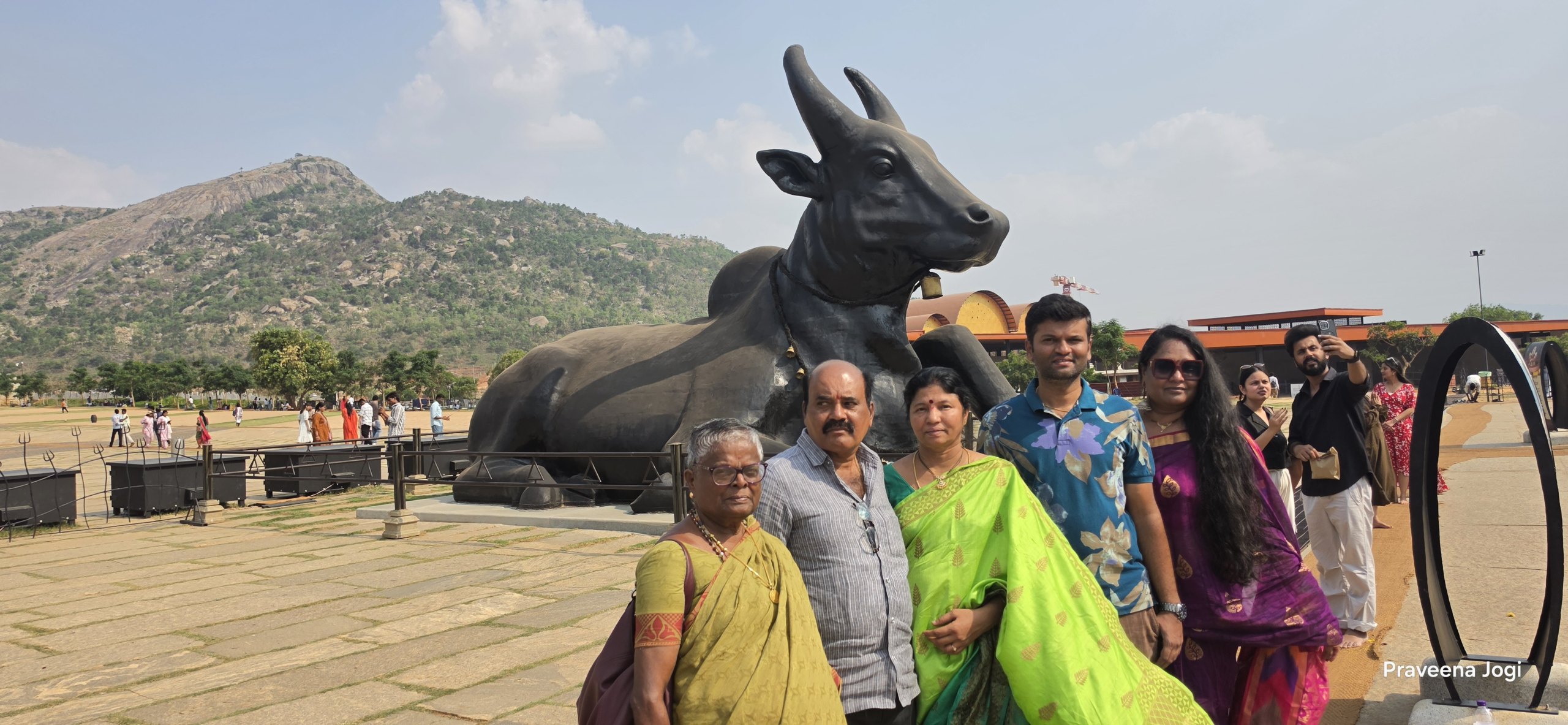
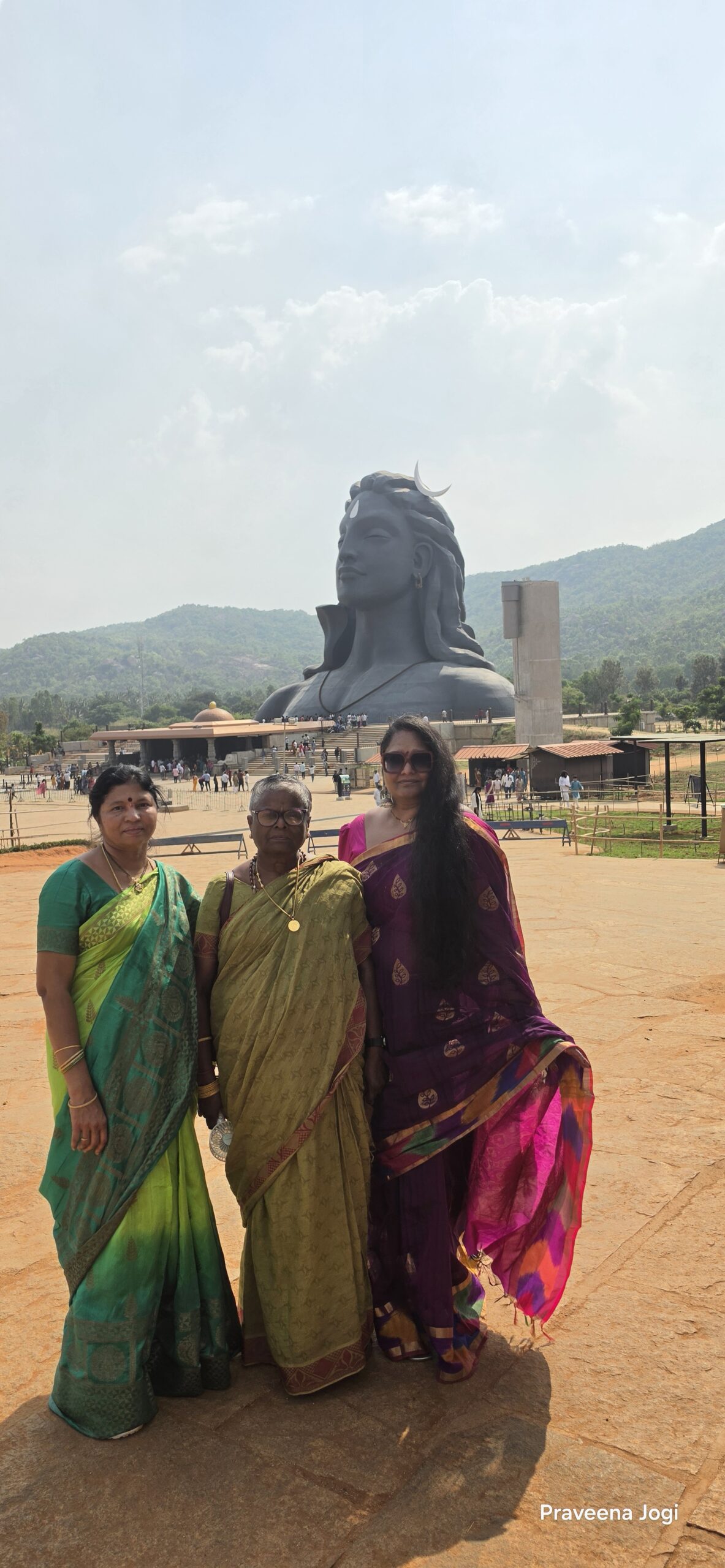
A Family Day Trip to Isha Foundation, Bangalore

Family trip in India

Chasing Serenity & Extreme Heat

If you had told me a few years ago that a trip to Bangalore would leave me sweating in near 42-degree weather, I wouldn’t have believed you. Bangalore is supposed to be cooler than Tirupati for sure, but first time ever I encountered that heat in Bangalore. Around 42 degrees is super hot—this is called climate change.

Despite the scorching sun, my brother’s family and I set out for a quick, impromptu day trip. We were looking for nearby attractions to see, searched online, and decided to visit Nandi Hills and the Isha Foundation Chikkaballapura.

The Spiritual Marvel: A Replica of Coimbatore

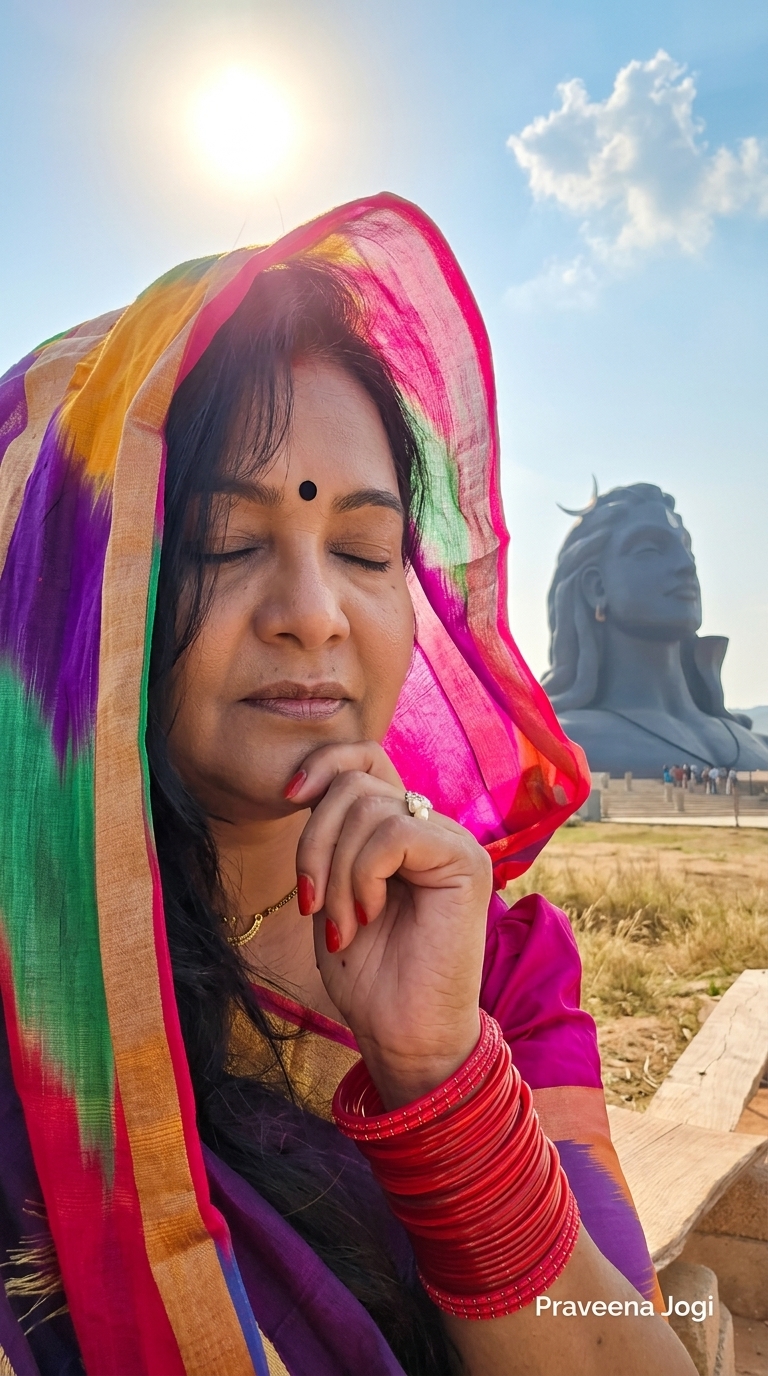
Located at the foothills of Chikkaballapura, this place is a replica of the famous Coimbatore center founded by Sadhguru. The entire campus is known for meditation, yoga, and inner peace. Even in that weather, it felt very divine to see this place.

As per the meditation, it was divine to see the Naga, Adiyogi, Nandi, and the peacefulness of sitting in the quiet area. Everyone respects the area and follows the directions which were given by the volunteers. Everyone was at their best.

I see the difference in how people are getting to know the value of meditation and quietness. They are supposed to do the same in temples, but that is unfortunately not the case in most temples. Here, the atmosphere of respect and silence is truly maintained.

Here are the iconic highlights we witnessed:

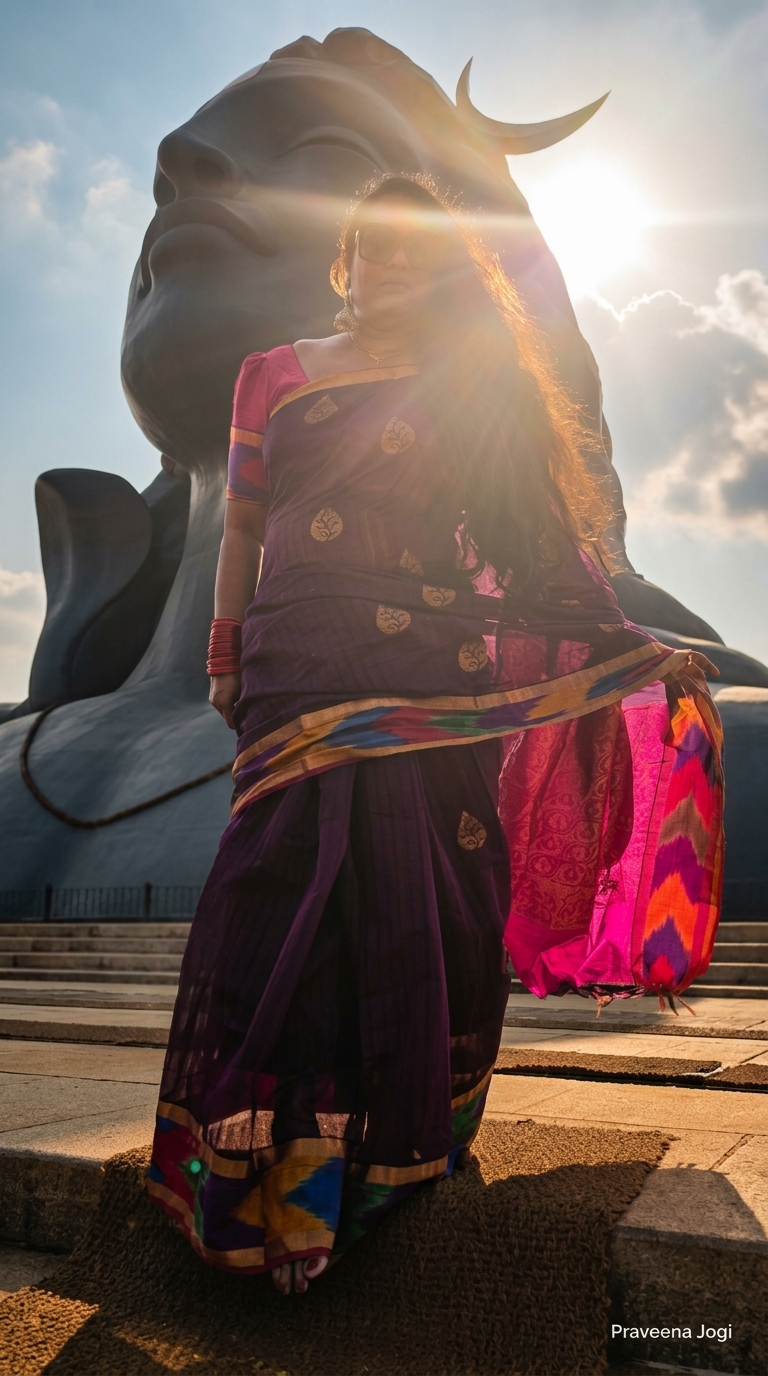
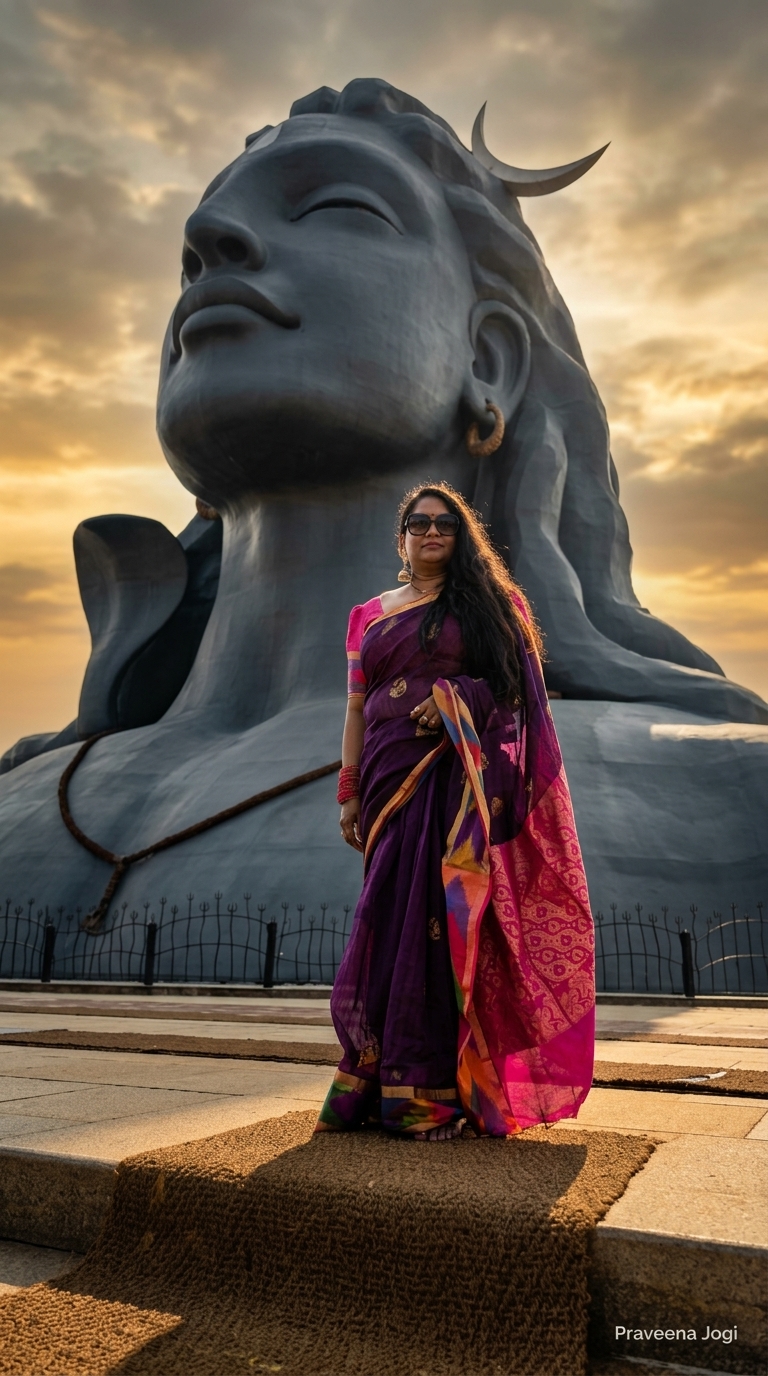
  • The 112-Foot Adiyogi Statue: This massive steel bust of Lord Shiva stands majestically against the backdrop of the hills and is absolutely beautiful to look at.

  • The 21-Foot Nandi: Positioned right in front of the Adiyogi, sitting in perfect stillness.

  • Yogeshwara Linga: A powerful space where you can experience a deep sense of calm and meditation.

  • The Naga Shrine: Located near the entrance, a beautifully crafted shrine dedicated to the serpent energy.

What is Lacking & Some Solution Ideas for the Foundation

While the divine and peaceful vibe of the foundation is undeniable, there are a few things lacking. I am not sure what the exact reason behind these design choices is, but perhaps Sadhguru himself can answer them. If you are planning a visit with your family, keep these challenges in mind—along with a few ideas on how the foundation could easily solve them:

1. Severe Lack of Seating Areas

The campus spans a massive area, which makes it incredibly hard for kids and elders to walk around without a break. Shockingly, there are almost no areas, chairs, or seats to just sit and rest. The only real place to sit is inside the meditation area itself, or on a single bench located next to the shoe stand—and that is it. Because of this, it can be exhausting. For instance, my mom finds it hard to walk; by the time she walked around the grounds, she was too tired to even climb the stairs to go near the Adiyogi statue.

💡 The Solution: > Planting trees with seating around them might seem like a good idea, but during Sadhguru’s huge gatherings, trees would block the view, so that might not work. Instead, the foundation could install wall-mounted foldable chairs secured to the walls (especially near the stairs and pathways). If an elderly person needs to rest, they can simply pull the chair down, sit, and fold it back up when done. It wouldn’t take up any space or get in the way of large crowds.

2. No Seating Options in the Meditation Area

Inside the meditation space, the rule is for everyone to sit down on the floor. I understand the traditional aspect of this, but it is extremely painful and difficult for elders to sit down on the ground and try to get back up. There is no absolute rule that says you must sit down to meditate—after all, historically, some yogis even do tapas while standing on one leg!

💡 The Solution: > The foundation could use the same concept here: install a few sleek, foldable chairs along the back or side walls of the meditation area specifically for elders who physically cannot sit on the floor.

3. Foot-Burning Floor Stones

About 75% of the entire campus requires you to walk completely barefoot. Unfortunately, the type of stones they used for the flooring is highly reactive to the weather and gets burning hot under the sun. To their credit, the foundation has laid down a mat path for visitors to walk on. However, in extreme heat, even those mats get intensely heated up and burn your feet.

💡 The Solutions: > * Running Water Paths: They could have water constantly running over those mat pathways. Perhaps they could design it so water flows beautifully down from the Adiyogi statue itself, making it an attraction. This is similar to the concept in Tirumala, where running water channels are placed at the temple entrances for visitors to wash, cool, and purify their feet before entering.

  • Retractable Mist Blowers: If they don’t want people walking through water, they could install mist blowers every few feet to keep the air and mats cool. For large crowd gatherings, these mist blowers could even be designed to retract completely into the ground at the touch of a button.

The Food Situation & That Ice Cream!

After walking around the campus, we needed to get some food. The campus features two restaurants to serve the visitors.

💡 Inside Tip on Crowds:

Both of them have the exact same food, so just pick whichever one has less crowd. Because of the visitors, they run out of most of the food quickly—I guess they may have cooked less food that day, as most of it was run out by the time we got there.

Luckily, we managed to order some roti and curry, and it was very tasty! Just keep in mind that you need to order and pickup by yourself from different counters.

Of course, to battle that unprecedented Bangalore heat, my brother and I enjoyed ice cream. There is nothing quite like a cold treat when the weather is trying to melt you! In that hot weather, it was truly the icing on the cake.

Final Thoughts

Visiting the Isha Foundation at Chikkaballapura is a powerful experience that leaves a lasting impression. It is incredible to see a space where people genuinely respect the quietness and value the energy of meditation. While the foundation has created something visually and spiritually breathtaking, addressing a few basic comfort needs—like foldable seating and floor-cooling systems—would make it an even more inclusive space for families traveling with children and elders.

Despite the extreme 42-degree Bangalore heat, the beautiful sights, the tasty food, and that life-saving ice cream made it a memorable day trip with family. If you plan to visit, go with an open mind, be ready to walk, and prepare to immerse yourself in absolute serenity!

#IshaFoundationBangalore #SadhguruSannidhi #Chikkaballapura #AdiyogiBangalore #NandiHills #BangaloreDiaries #NammaBengaluru #BangaloreTravel #Adiyogi #Sadhguru #Yogeshwara Linga #NagaShrine #MeditationSpace #InnerPeace #SpiritualJourney #YogaCulture #DivineVibes #InwardJourney #FamilyDayTrip #OneDayTripBangalore #TravelKarnataka #IncredibleIndia #TravelBloggerIndia #ClimateChangeRealities #SummerTravelTips


Image Gallery

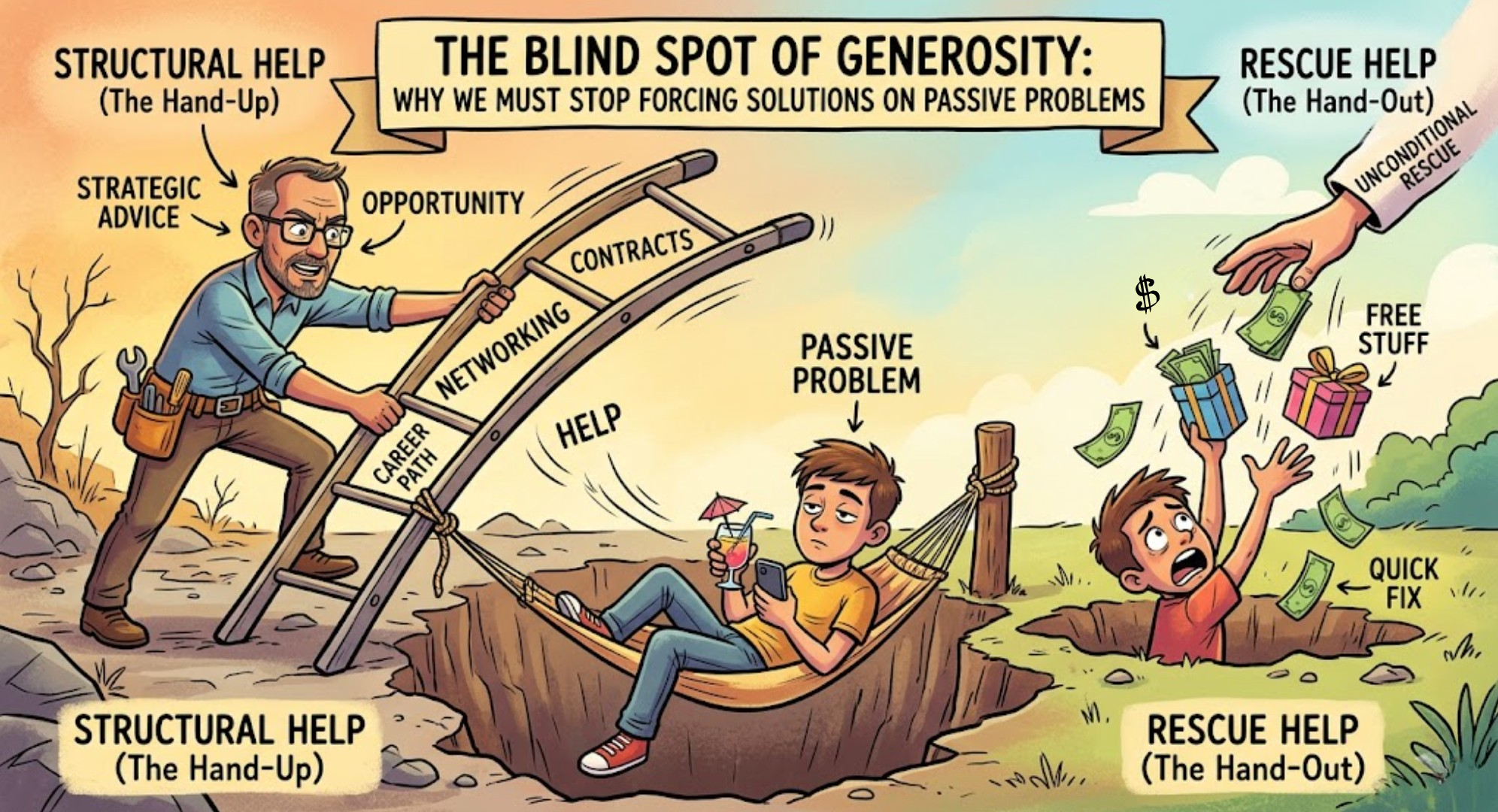
The Blind Spot of Generosity

Why We Must Stop Forcing Solutions on Passive Problems

We have all been taught that the four-letter word HELP is something we should offer freely. We see someone we care about drowning—struggling financially, stuck in a career rut, or spinning their wheels for years—and our natural instinct is to build them a bridge to safety.

Because we have the resources, the network, or the experience, we step in to offer help that wasn’t explicitly asked for. We think we are being visionary mentors.

But there is a painful, hidden life lesson in unsolicited generosity: You cannot want someone’s success more than they want it themselves. And if you try, you will end up being resented for it.

When you offer high-level help to a low-motivation mindset, things go wrong in very specific ways. Here is the anatomy of why forcing a solution on someone else’s problem backfires—and the hard boundaries we must set to protect our peace.

1. The Trap of the “Hand-Up” vs. the “Hand-Out”

There are two very different ways people want to be helped, and confusing the two is where most of our heartbreak happens:

  • Rescue Help (The Hand-Out): This is passive. It’s when someone wants cash, a free place to stay, or a temporary bailout to take the immediate pressure off. It requires zero effort from them.

  • Structural Help (The Hand-Up): This is active. This is when you give them a job lead, pay for a professional development opportunity, or introduce them to your network. This requires them to step up, work, and risk failure.

The ultimate blind spot of generosity is offering Structural Help to someone who only ever wanted Rescue Help. When you hand a fishing rod to someone who just wanted a free fish, they won’t thank you for the tool—they will resent you for making them work for their dinner.

2. When Opportunity Looks Like “Rules”

When you invest your hard-earned money and professional reputation into creating an opportunity for someone else, you expect them to treat it with respect. You expect them to hustle, network, and show gratitude.

But to an entitled or unmotivated mind, your high expectations don’t look like a gift; they look like a prison.

They will take the funded training, the interview, or the contract opportunity, and instead of seeing a career lifeline, they will treat it as a hobby or a leisure activity. And the moment you ask them to take it seriously? You become the “strict” bad guy. They will flip the script, play the victim, and complain to anyone who will listen that your help came with too many strings attached.

3. The Generational / Cultural Shield

The most frustrating part of this dynamic is the aftermath. When called out on their lack of effort, the person (and often their enablers) will hide behind excuses. They will say:

  • “I never asked for your help anyway.”

  • “That’s just how that generation is.”

  • “You’re being too intense; they just wanted to have some fun.”

They will rewrite history to make your massive financial and personal sacrifice look like an uninvited nuisance, purely to protect their own ego from the reality that they wasted a golden opportunity.

🛑 The New Rule of Engagement

If you take away only one lesson from this, let it be this: Never invest more into a solution than the person with the problem is investing themselves. > If they are putting 0% effort into fixing their life, your investment should be 0%. If they are sweating, hustling, and trying their absolute best, then you can match their energy. But matching apathy with high-level opportunity is a recipe for financial loss and emotional burnout.

The Takeaway

Closing the door on helping someone you care about is incredibly heavy. It feels counterintuitive to everything we are taught about being a good person or a supportive mentor.

But true wisdom lies in knowing when your help is actually harming both of you. By constantly rescuing someone or forcing opportunities on them, you are enabling their complacency and draining your own resources.

The next time you see someone struggling and feel the urge to swoop in and save the day, stop and ask yourself: Are they holding the line, or am I just pulling dead weight? Let them ask. Let them work. And save your life-changing opportunities for the people who are hungry enough to actually run with them.

Have you ever given someone a major opportunity only to watch them treat it like a joke? How did you handle the boundary afterward? Let me know in the comments below.


Image Gallery

The Fifty-Year Magic

Why I Spent My Milestone Birthday at the Happiest Place on Earth

By Praveena Jogi

They say turning 50 is a major “level up” in life’s journey. As my milestone birthday approached, I’ll admit: I didn’t have a clue what to do.

That was until my husband had a spark of inspiration. He knew my heart better than I did, and his idea was simple yet profound: “Let’s take you to Disneyland.” Joined by my two sons, it turned into the most thoughtful gift—a chance to reconnect with the childhood magic I have loved for five decades.

Why is Disneyland Called the Happiest Place on Earth?

The answer lies in the immediate positive environment. As soon as we entered Disneyland, the land, the air, and the entire atmosphere were charged with positive vibes. It is a place where a “Digital Disney” ecosystem meets genuine human connection.

Despite the crowds and the “strollers everywhere” (from babies to toddlers), we remarkably hardly heard a single cry. In the long lanes, I saw teenagers and adults chatting, laughing, and truly connecting—often more than they do in their own homes. There is a patient, kind energy in the air; adults aren’t angry about the wait; they are simply happy. This environment washes away the “mad” and replaces it with “magic.”


Praveena’s “Zero-Defect” Disney Tips

I have been to Disney several times—both Disney World and Disneyland—but the landscape has completely shifted. From ticketing to wait times, the park has moved toward a “Digital Disney” model. To keep your trip as efficient and seamless as possible, here is how to navigate the new systems:

1. The Power of the App

Everything—from accessing your park tickets and Lightning Lane passes to mobile food ordering and hotel check-in—is now managed through the official Disneyland Mobile App.

  • Pro Tip: The app acts as a “single pane of glass” for your entire itinerary. However, because it uses GPS, it is a major battery drain. Make sure to pack a high-capacity portable charger and cables.

  • Linking: You can link all family tickets to one primary phone, which is what we did. It keeps all your data centralized and secure in one place.

2. Mastering the Lightning Lane

The “FastPass” of the past is gone. If you want to maximize your time, Lightning Lane entry is a must. While it is an extra investment, the time saved is invaluable for a short trip.

  • The Hotel Perk: We stayed at the iconic Disneyland Hotel and opted for a room with a Downtown Disney view. This allowed us to watch the fireworks from our own balcony!

  • Pro Tip: Staying on-site allows you to stay later or easily return to the room for a mid-day recharge.

3. Hydration Strategy: The Copper Advantage

We brought a copper water bottle this time, filled with ice and water. It stayed cold significantly longer and the water tasted much fresher.

  • The “Secret” Water Tip: Instead of filling stations, go to any food counter and ask for a free cup of iced water. It tastes better, and you can pour it right into your bottle.

4. Professional Memories via Disney PhotoPass

As a professional photographer, I was eager to see the quality of the Disney PhotoPass system. We opted for the all-inclusive ticket option, and it was worth it.

  • Zero-Defect Documentation: These photographers take as many photos as you want, and they appear in your app within 5 minutes. They are high-resolution and free to download with your pass. Just remember to download them within 45 days before they are removed from the cloud!

  • More Magic: I will be uploading my personal professional shots from this trip to my photography page, PJ4Ever Photography on Facebook, and my portfolio at PJ4Ever.com.


Quick Reference: The Disneyland Planning Checklist

If you are planning your own magical getaway, use this checklist to ensure a seamless experience:

  • [ ] Download the App: Set up the Disneyland App before you arrive.

  • [ ] Stay Powered: Pack a portable phone charger.

  • [ ] Link Tickets: Link all family tickets to one device for faster scanning.

  • [ ] Buy Lightning Lanes: Save up for these—they are a must-have for short trips.

  • [ ] Stay On-Site: Book a Disneyland Hotel for easier park access and the fireworks view.

  • [ ] Copper Hydration: Bring a copper bottle and ask for free cup water at food counters.

  • [ ] Use PhotoPass: Capture memories with professional photographers throughout the park.

  • [ ] Download Photos: Save your professional shots within 45 days.

  • [ ] Check PJ4Ever: Visit PJ4Ever.com to see how the magic looks through a professional lens.


The Magic of Believing at Any Age

Beyond the rides and the spectacle, Disneyland serves as a powerful reminder that our capacity for wonder should never have an expiration date. At fifty, I realized that we often get so caught up in the “how” of our daily lives—the logistics, the schedules, and the costs—that we forget the importance of the “wow.” Stepping into that park is an act of courage; it is a choice to let go of the adult world’s cynicism and embrace a place where dreams are treated as reality. It inspires us to carry that same light back into our own lives, reminding us that no matter how many years have passed, it is never too late to start a new chapter, believe in a little magic, and find the joy in the journey.

Fifty and Full of Wonder

At 50, I felt the exact same magic I felt at five. Navigating Disneyland’s new digital ecosystem reminded me why I am so passionate about my mission at Pravision™.

Whether you are managing a milestone birthday through an app or managing a growing company, having a “single pane of glass” to view your operations is what creates a truly seamless, “zero-defect” experience. It allows you to focus on the joy of the moment rather than the stress of the process.


About the Author: Praveena Jogi

Praveena Jogi is the Founder of Pravision™, a business solutions firm dedicated to creating “Zero-Defect” environments for entrepreneurs. When she isn’t streamlining business operations, she is capturing the world’s beauty through her lens at PJ4Ever Photography.

From the Yugas to the Natural World

The Marriage Debt: From the Yugas to the Natural World

In many modern marriages, an invisible ledger is being kept. It is a ledger of grievances that stretches back through Yugas. We are witnessing a rising trend where the push for “freedom” has taken a turn toward a role reversal—a belief that for true justice to occur, the “oppressor” must now become the “servant.”

1. A Message to the Powerful Woman

First, kudos to the ladies and girls for growing in all aspects of life. But as you become powerful, I ask you: Why fight for simple things? If you come home exhausted, hire a maid or order takeout. Why expect your husband to do the work when he also did the same hard work and came home tired just like you? When you stop obsessing over “equality,” you will find options to outsource the labor. Remember: “IF YOU DON’T DO THE WORK FOR ONE DAY, THE WORLD DOES NOT END.” With this mindset, there is no fight and no ego.

2. The Cosmic Pendulum: Why the Yugas Matter Now

History is a cycle of declining spiritual awareness. Throughout all Yugas, the male role has remained the same, yet in our current age, the husband is in constant trouble.

  • Treta Yuga (The Age of Duty): In the time of Rama and Sita, there was no “Equality” because it wasn’t needed. Rama fulfilled his duty as the superior lead, and Sita didn’t ask if it was “fair” to go to the forest; she went because she was the soul of the home. There was peace because there was no competition.

  • Dvapara Yuga (The Age of Energy): By the time of Krishna and Satyabhama, the human ego began to rise. Satyabhama represents the “Modern Woman”—powerful and proud. When Krishna touched her feet, it wasn’t because he was inferior; it was a divine strategy to melt her ego. He knew that if a wife’s ego stays high, the husband’s peace dies. Even a God had to manage the trouble caused by a wife’s ego.

  • Kali Yuga (The Age of Quarrel): We are now in the darkest age. Today, the husband is in constant pain. He works hard and provides, yet he returns home to a “battlefield.” Every small thing—a missed chore or a different opinion—becomes a reason for the wife to fight him in the name of “equality.” This artificial movement has taught women to point fingers, leaving the husband feeling like he can never do enough.

3. A Word to the Husbands: The Power of Caring

Husbands, we know we can’t change you, but remember: when a wife fights for “equality,” she is often actually looking for caring.

You don’t need to touch her feet like Krishna. Just give her a glass of water when she comes home or ask, “How was your day?” That small act will touch her heart and satisfy her ego. She will likely do the rest of the work for the day happily. Remember: you are the man of the house, but caring is a must. It brings balance, not equality.

4. Roots vs. Evolution: The Biological Reality

The universe was created with specific laws. As the proverb goes: “You can never make a dog’s tail straight.” A fish cannot be a human. Similarly, the Universe created Man and Woman with different qualities. There is no design in nature for Men and Women to be “equal.”

If you want true equality, can you move a pregnancy to the male for a few months? Since that is biologically impossible—since the Universe assigned the sacred duty of birth to the woman—why search for “equality” in small household duties? When the most fundamental roles of life cannot be swapped, forcing an artificial 50/50 split on everything else only leads to conflict.

5. Lessons from the Natural World

Nature provides the ultimate examples of commitment without the “equality” argument:

  • The Penguin: The male protects the egg in the freezing cold while the female hunts. They rejoin without ego, simply fulfilling their nature.

  • The Sea Horse: The male carries the eggs in his own tummy. Their bond is for life because they don’t change their roles or question their partner.

Conclusion: Breaking the Cycle

A marriage cannot survive a “revenge” phase where the wife tries to make the husband a servant. This mindset achieves nothing but loneliness. Real equality is not about making men “pay” for the past; it is about accepting our unique, unchangeable roles. Stop fighting over the chores of the house. Husbands, provide the care; wives, provide the heart. Close the cosmic ledger and aim for a partnership of the soul.


Image Gallery


The Path of 2026

The Path of 2026

The clock strikes a beautiful new beginning, As the journey of 2026 starts spinning. Thank you for the support that will come your way, Guiding your vision through each passing day.

Thank even the fever, the flu, or the strain, For they build the armor to handle future pain. Thank even those who peek in with bad intent, For that negative omen was an opportunity sent. With your aura, you turn that energy into gold, Transforming the dark into a story that’s bold.

But most of all, look within and see, The power of your own tenacity. Thank yourself for never giving up, No matter how full or low the cup.

Whether the result is massive or small, Your hard work is the greatest win of all. Thank yourself for remembering that truth: Your effort is the payoff, in age or in youth.

This is not a resolution, but a moment of grace, To thank others and yourself for the path you embrace. Close your eyes for just one second and say: “Thank you, ________” for the strength of today.

In the 31,536,000 seconds of the year that has just begun, Thank you for taking just one to find the peace that makes you one. There is nothing too big and nothing too small, For the architect of greatness who will stand through it all.

Wish you a Happy New Year 2026!

SHARE :

Facebook

Twitter

LinkedIn

Written By

Praveena Jogi


Let’s Talk

More Articles

The Great Debate

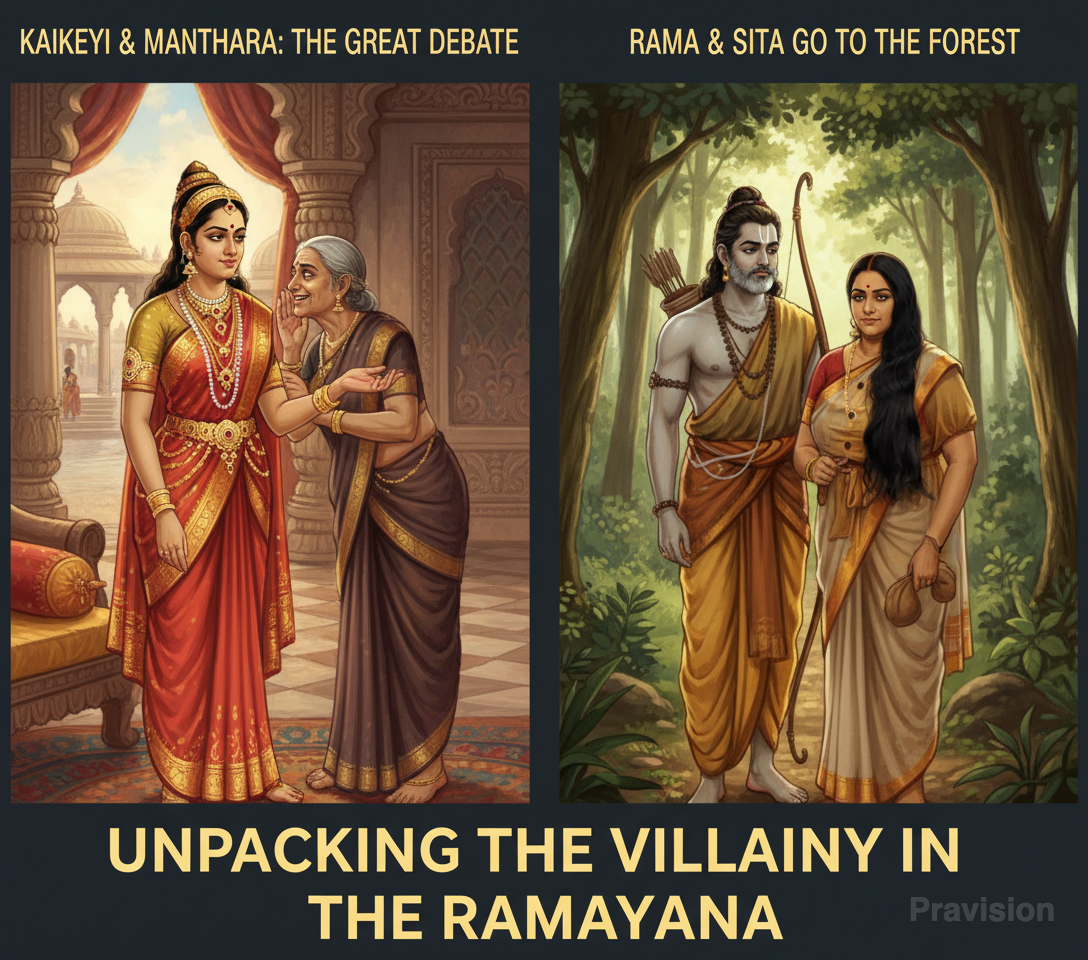
Two-panel illustration: Left shows Kaikeyi in red sari debating elderly Manthara in palace; right shows Rama with bow and Sita in forest. Hindu mythology artwork.

Kaikeyi or Manthara

During a recent ladies’ evening, amidst the usual lively chatter, an unexpected topic completely seized the room: Who is the true villain of the Ramayana—Queen Kaikeyi or the maid Manthara?

You might wonder why such a deep, ancient epic found its way into a modern party, but the truth is, the topic was instantly captivating. It sprang up when a friend described her challenge in teaching Bala Vihar. To engage today’s kids in stories like the Ramayana, she has to contextualize the lessons in modern life. As an activity, she posed this very question to her students: Who is the bad person?

The results, both in her classroom and at our party, were striking: Approximately 90% chose Kaikeyi, and 10% chose Manthara.

Meet the Instigators

To set the stage:

  • Manthara: The cunning, hunchbacked maid. She is the initial poison, the one who plants seeds of jealousy and suspicion in the Queen’s mind. She is the architect of the tragedy.

  • Kaikeyi: The youngest and once-beloved Queen, mother of Bharata. Before the banishment, she was known for her deep affection for Rama. She is the executor of the tragedy, the one who ultimately forces the devastating demand upon the King.

Why the Majority Blames Kaikeyi

The argument for Kaikeyi’s greater guilt relies on the principle of accountability. As a Queen and a mother, she had the ultimate authority. Manthara could only suggest, but Kaikeyi chose to act. She allowed a single person’s jealous counsel to override her lifelong love for Rama and her husband, Dasharatha. Even if Manthara planted the seed, Kaikeyi was the fertile ground.

Why the Minority Sides with Manthara

Those who blame Manthara focus on causation. Without Manthara’s persistent, malicious effort, Kaikeyi would have happily seen Rama crowned. Manthara introduced the idea of royal injustice where none existed. In this view, Kaikeyi was a vulnerable victim of psychological warfare—not acting as herself, but as a tool of Manthara’s malice.

The “Karmic/Divine” Perspective: The Destiny Argument

Beyond the human drama lies a deeper layer often discussed in traditional circles: The Destiny Argument. In many retellings, it is believed that the gods intervened to ensure the higher purpose of Rama’s incarnation was fulfilled. It is said that the Goddess Saraswati “sat on Manthara’s tongue” or clouded Kaikeyi’s intellect to trigger the exile.

From this perspective, neither woman is a true villain; they were mere instruments of a larger cosmic plan. If Rama had not been sent to the forest, the demon-king Ravana would never have been defeated. While this doesn’t erase their earthly actions, it suggests that their “villainy” was a necessary catalyst for the triumph of Dharma.

The Final Verdict: Influence vs. Action

The debate boils down to a timeless question: Is the person who originates the evil idea worse than the person who has the power and acts upon it?

Our party agreed: While Manthara is the initial source of the poison, Kaikeyi is the greater villain. A powerful person is always accountable for the choices they make, regardless of the influence. Manthara was the whisper, but Kaikeyi was the roar that tore the kingdom apart.

Now, we turn the question over to you: Does the “Destiny Argument” change your view, or do you still hold the individuals accountable? Who do you believe is the true villain? Share your thoughts in the comments below!

SHARE :

Facebook

Twitter

LinkedIn

Written By

Praveena Jogi


Let’s Talk

More Articles