We’re always talking about the “must-haves” for good customer experience: know your product, talk clearly, solve problems fast. But here’s the thing – we’re missing a HUGE piece of the puzzle. It’s something we rarely talk about, let alone train people on: Emotional intelligence (EQ).
EQ is your ability to get what’s going on with your own feelings AND the feelings of others. And it’s not just for work – it makes a difference in ALL parts of your life, from how you handle customer interactions to how you connect with your family and friends.
Why should we even care about this “EQ” thing? Well, here’s the deal:
Customers are PEOPLE: They come with all kinds of emotions, good and bad. If we can’t understand those emotions, we’re missing out on a chance to REALLY connect with them.
It’s about MORE than just fixing stuff: Sure, solving the problem is important, but it’s NOT the whole story. People remember how you MAKE them feel, not just whether you fixed their internet.
EQ makes a difference EVERYWHERE: This isn’t just for work. Understanding emotions helps you in your personal life too – with your family, friends, everyone!
Okay, so you get that emotional intelligence (EQ) is important, but how do you actually develop it? Here’s the thing: it’s like any skill, it takes practice!
Here are some tools to help you boost your EQ:
Pay attention to your feelings: Start noticing how you feel in different situations. What triggers you? What makes you feel good? The more aware you are of your own emotions, the better you can manage them.
Find healthy ways to cope with stress: We all have bad days. Figure out what helps YOU de-stress. Exercise, music, meditation, spending time with loved ones – whatever works! This keeps your emotions from spilling over into your interactions with others.
Put yourself in other people’s shoes: Try to see things from their perspective. Why might they be feeling the way they are? This helps you build empathy and understand their reactions.
Be honest with yourself: About your strengths AND weaknesses. Nobody’s perfect! Knowing your weaknesses helps you work on them.
Journal your thoughts and feelings: This can help you identify patterns in your emotional responses and reactions.
Practice active listening: Go beyond just hearing words. As someone speaks, focus on truly understanding their message and the emotions behind it. What are they really trying to communicate?
Challenge negative thoughts: When you catch yourself thinking negatively, try to reframe the situation in a more positive light.
Take a “pause”: Don’t be afraid to take a moment before responding, especially in heated situations. This prevents impulsive reactions and allows you to choose a more constructive approach.
EQ is a journey, not a destination. It takes time and effort, but it’s SO worth it. Not only will you create better experiences for your customers, but you’ll also improve your relationships and overall well-being.
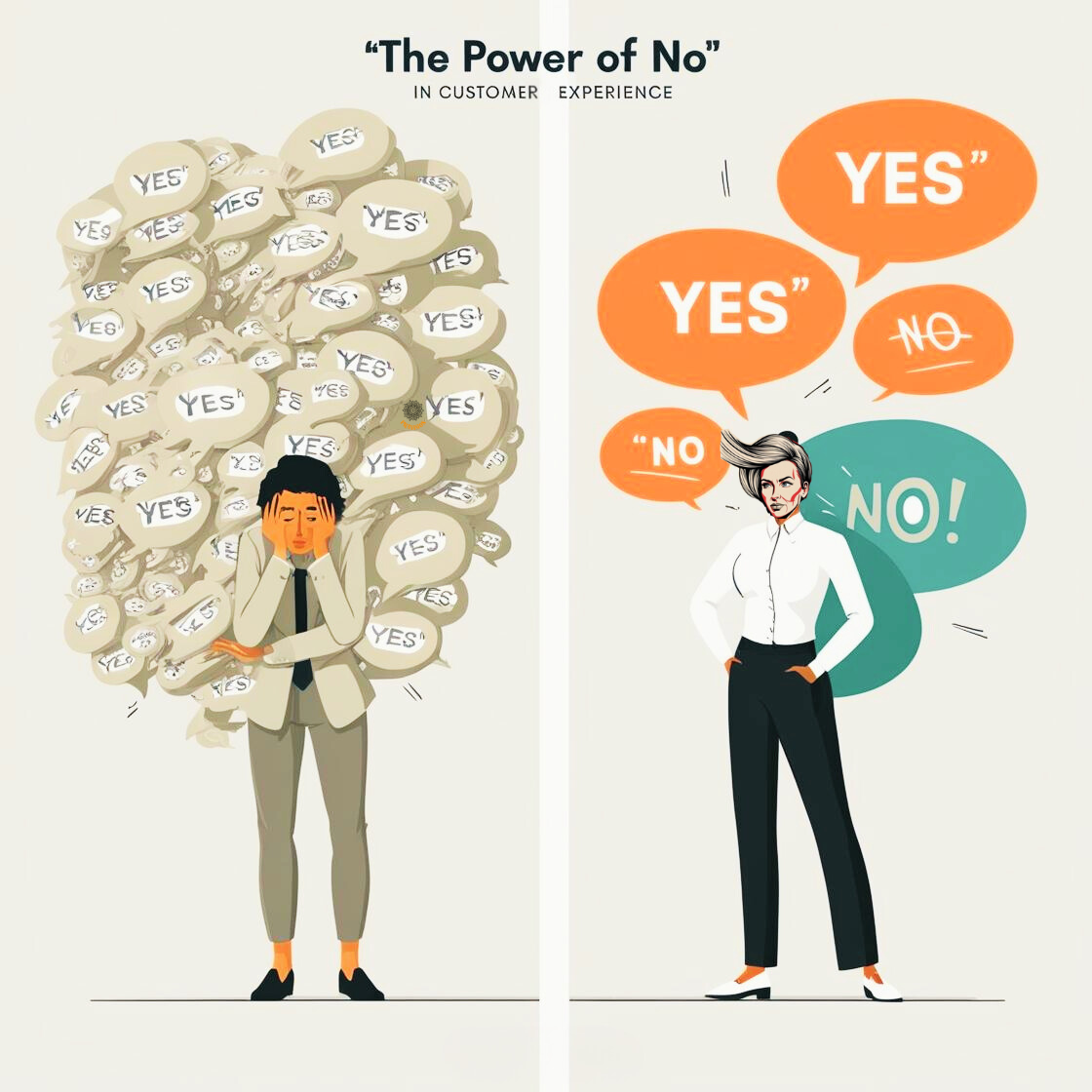
As I always say, “Customer Rocks!” In the world of customer experience, we strive to support our customers in every possible way. But sometimes, the best way to support them is by saying “no.”
The Experience Team: Face (and Heart!) of the Company
Before we dive into the art of saying “no,” let’s talk about the incredible people on the front lines: the Experience Team. They are the face, the voice, and yes, even the heart of the company.
Think about it:
First point of contact: Whether it’s a new customer with a question or an existing one facing an issue, the Experience Team is often the first – and sometimes only – interaction a customer has with your company.
Problem solvers extraordinaire: From simple inquiries to complex technical issues, they handle it all with grace and efficiency.
Crisis managers: When things go wrong (and they inevitably do!), the Experience Team is there to calm angry customers, provide solutions, and restore confidence.
So, yes, developers, C-level execs, and sales teams, while your roles are vital, let’s acknowledge the crucial role of the Experience Team. They are the ones who truly connect with customers on a daily basis, building relationships and shaping perceptions of the company.
Now, back to the power of “no.”
Saying “yes” to every customer request might seem like the path to customer satisfaction, but it can actually be detrimental in the long run. Here’s why:
Setting unrealistic expectations: Constantly saying “yes” can lead customers to believe that anything is possible, setting them up for disappointment when you inevitably have to say “no” down the line.
Straining resources: Agreeing to every request can stretch your team thin and impact your ability to deliver on promises, leading to delays and frustration for everyone.
Compromising integrity: Sometimes, a customer request might conflict with your company’s policies, values, or even legal obligations. Saying “yes” in these situations can compromise your integrity and damage your reputation.
When to Say “No” (and How to Say it Gracefully):
It’s important to recognize those situations where saying “no” is the best course of action. Here are a few examples:
Feature Requests: If a customer requests a feature that’s not currently in the product or planned for the roadmap, be honest and upfront.
Instead of a flat-out “no,” say something like, “That’s a great suggestion! While it’s not currently a feature we offer, I’ve logged your enhancement request so our product team can consider it for future development.”
Unreasonable Demands: If a customer makes a demand that is outside the scope of your service or violates your terms and conditions, it’s okay to decline.
Politely but firmly explain the situation and offer any reasonable alternatives.
Requests that Compromise Security or Privacy: Never agree to a request that could jeopardize the security or privacy of your customers or your company.
Explain the importance of these measures and reassure the customer that their data is safe.
So, how do you say “no” effectively?
Empathy first: Acknowledge the customer’s request and express understanding for their situation.
Explain clearly and honestly: Provide a clear and concise explanation for why you’re unable to fulfill the request. Be transparent and avoid making excuses.
Offer alternatives: Whenever possible, suggest alternative solutions or options that might meet the customer’s needs.
End on a positive note: Reiterate your commitment to helping the customer and thank them for their understanding.
The Bottom Line:
Saying “no” is not about being difficult or unhelpful. It’s about setting healthy boundaries, managing expectations, and ultimately, providing a better customer experience. By mastering the art of saying “no” effectively, you can strengthen customer relationships, protect your company’s interests, and empower your Experience Team to truly shine.
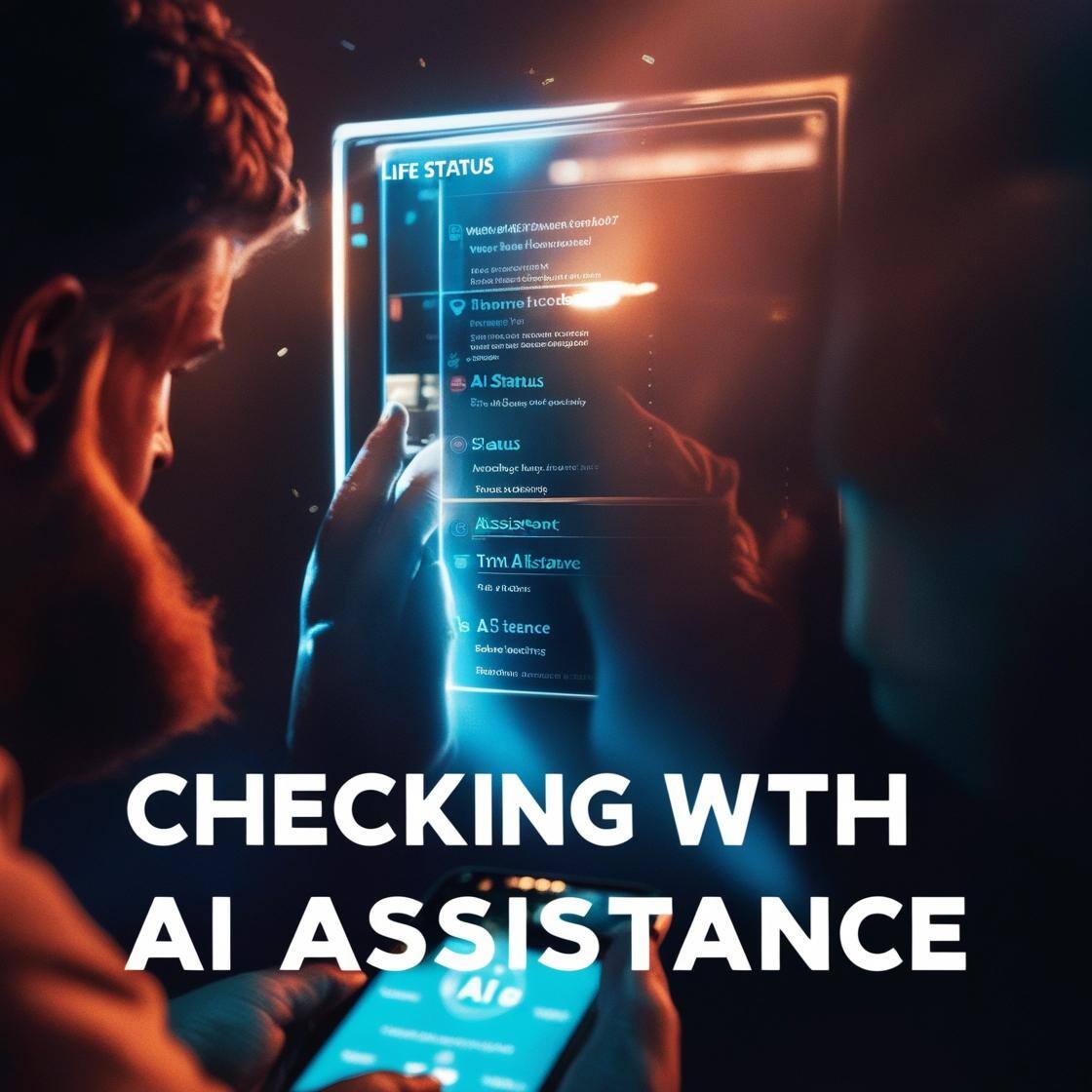
The question of how to “check the status of a life” is a profound one, touching upon themes of well-being, purpose, and fulfillment. It’s about understanding who you are, what you value, and whether you’re living in alignment with your authentic self. While AI can’t provide all the answers, it can offer valuable tools and insights to help us on this journey of self-discovery. One of these tools is personality assessment, which is increasingly being enhanced by AI.
Traditional Methods for Checking the Status of a Life
Before delving into the role of AI, let’s acknowledge the traditional ways people have sought to assess their lives:
Introspection and Reflection: Journaling, meditation, and therapy can facilitate self-awareness and help us understand our values, goals, and emotions.
Social Connection: Engaging with loved ones, seeking feedback, and participating in communities can provide external perspectives and support.
Goal Setting and Achievement: Setting and pursuing meaningful goals can provide a sense of purpose and direction.
Physical and Mental Health: Prioritizing physical and mental well-being is crucial for overall life satisfaction.
Personality Tests: A Key to Understanding Your “Life Status”
Personality tests can be a powerful tool for checking the status of your life. By providing insights into your personality traits, strengths, and weaknesses, they can help you understand:
Your motivations and values: What drives you? What’s truly important to you? Are your current pursuits aligned with your core values?
Your natural tendencies: Are you introverted or extroverted? Are you a planner or more spontaneous? Understanding your natural tendencies can help you make choices that are aligned with your personality.
Your strengths and weaknesses: What are you good at? Where do you struggle? This knowledge can help you leverage your strengths and develop strategies to overcome your weaknesses.
Your preferred communication and interaction styles: How do you prefer to communicate with others? How do you approach relationships? Understanding your interaction style can improve your relationships and help you navigate social situations more effectively.
By gaining a deeper understanding of your personality, you can gain clarity on whether you’re living a life that is true to yourself. This self-awareness is essential for assessing your “life status” and making adjustments to create a more fulfilling life.
The Importance of Honesty in Personality Tests
“Complete the Test. Be yourself and answer honestly to find out your personality type.” This common instruction highlights a crucial aspect of personality tests: their reliance on self-reported data.
Why is honesty so important?
Accurate Results: Personality tests are designed to analyze patterns in our responses and match them to pre-defined personality types or traits. Dishonest answers can skew these patterns, leading to inaccurate results that don’t reflect our true selves.
Self-Awareness: The process of honestly answering questions about ourselves can be a valuable exercise in self-reflection. It can help us identify blind spots, recognize patterns in our behavior, and gain a deeper understanding of our motivations and tendencies.
Personal Growth: Accurate personality assessments can be a starting point for personal growth. By understanding our strengths and weaknesses, we can identify areas for improvement and develop strategies to overcome challenges.
How AI Can Contribute to Understanding the “Status of a Life”
While AI can’t replace traditional methods of self-reflection, it can augment them in several ways:
Data-Driven Self-Awareness:
Wearable technology and health apps: These tools can track various metrics like sleep patterns, activity levels, and mood, providing objective data about our physical and mental health.
Social media analysis: AI algorithms can analyze our online interactions and provide insights into our social connections and emotional well-being.
Journaling apps: AI-powered journaling apps can analyze our writing for patterns and themes, helping us identify recurring thoughts and emotions.
Personalized Guidance:
Mental health chatbots: AI-powered chatbots can offer support and guidance for managing stress, anxiety, and other mental health concerns.
Virtual therapists: While not a replacement for human therapists, virtual therapists can provide accessible and affordable mental health support.
Personalized recommendations: AI can recommend activities, resources, and communities based on our interests and goals, helping us explore new paths and connect with like-minded individuals.
Early Detection and Intervention:
Predictive analytics: AI can analyze data from various sources to identify potential risks to our well-being, such as burnout or depression.
Proactive interventions: AI can suggest interventions or resources to address these risks before they escalate into major problems.
The Future of AI in Personality Assessment
AI is poised to revolutionize personality assessment. Imagine a future where AI can analyze:
Facial expressions and micro-expressions: AI algorithms could potentially detect subtle cues in our facial expressions that reveal underlying emotions and personality traits.
Voice patterns and tone: AI could analyze our speech patterns, tone of voice, and even pauses to identify personality characteristics.
Social media activity: AI could analyze our online interactions, posts, and preferences to gain insights into our personality and social behavior.
However, this raises important ethical considerations:
Privacy concerns: How do we ensure the responsible use of personal data in AI-powered personality assessment?
Bias and fairness: How do we prevent AI algorithms from perpetuating existing biases and stereotypes?
The human element: Can AI truly capture the nuances of human personality, or will it always be limited by its lack of lived experience and emotional intelligence?
AI can be a valuable tool for enhancing self-awareness, providing personalized guidance, and facilitating early intervention. However, it’s crucial to use AI responsibly and ethically, recognizing its limitations and prioritizing the human element in our quest for a fulfilling life. As AI plays an increasing role in tools like personality tests, we must remain mindful of the importance of honesty, self-reflection, and human connection in understanding ourselves and living a meaningful life. By combining these approaches, we can gain a clearer picture of our “life status” and make informed choices that lead to greater well-being and fulfillment.
We’ve already talked about how AI can transform the customer onboarding experience, creating personalized journeys that turn new users into raving fans (you can catch up on that here: https://blog.pravision.com/onboarding-with-ai-turning-new-users-into-raving-fans). But what about the impact on your team? How can managers and leaders leverage AI to boost efficiency, empower their teams, and drive business growth?
Let’s dive in!
The Value Proposition for Managers and Leaders
AI onboarding isn’t just about making things easier for customers; it’s about empowering your team to work smarter, not harder. Here’s how:
Increased Efficiency: AI automates those time-consuming, repetitive tasks that bog down your team. Think data entry, basic troubleshooting, and scheduling. This frees up your team to focus on higher-value activities like building relationships, providing personalized guidance, and strategizing for customer success.
Reduced Costs: By automating tasks and optimizing workflows, AI can help you reduce onboarding costs and improve your bottom line. This means you can do more with less, maximizing your resources and achieving a greater return on investment.
Improved Customer Satisfaction: A smoother, more personalized onboarding experience leads to happier customers. Happy customers are more likely to stick around, become repeat buyers, and spread the word about your amazing product.
Data-Driven Insights: AI provides valuable data and insights into customer behavior, preferences, and pain points. This allows you to make informed decisions, optimize your onboarding process, and continuously improve the customer experience.
Building a Vision for AI Onboarding
As a leader, it’s crucial to have a clear vision for how AI will fit into your onboarding strategy. Here are some key steps:
Define Your Goals: What do you hope to achieve with AI onboarding? Are you looking to reduce churn, increase customer lifetime value, or improve customer satisfaction?
Identify KPIs: How will you measure the success of your AI onboarding initiatives? Choose metrics that align with your goals, such as time-to-value, engagement rates, and customer health scores.
Develop a Roadmap: Create a phased implementation plan that outlines your AI onboarding strategy, including timelines, resources, and key milestones.
Empowering Your Team with AI
One of the biggest concerns I hear from managers is that AI will replace human jobs. But that’s not the case! AI is about augmenting human capabilities, not replacing them.
Think of AI as a powerful tool that empowers your team to do their best work. By automating routine tasks, AI frees up your team to focus on what they do best:
Building Relationships: AI can handle the initial interactions and basic troubleshooting, allowing your team to focus on building deeper relationships with customers.
Providing Personalized Guidance: AI can analyze customer data and provide insights that help your team offer tailored guidance and support.
Creative Problem-Solving: With AI handling the routine tasks, your team has more time to think creatively and come up with innovative solutions to customer challenges.
Real-World Examples from Pravision
At Pravision, we’ve seen firsthand how AI can empower customer success teams. For example, our AI-powered chatbot, Pravision Bot, automatically captures customer emails, extracts key information, and logs support tickets. This has significantly reduced the workload for our team, allowing them to focus on providing personalized support and building relationships with customers.
We’ve also used AI to analyze customer data and identify patterns in user behavior. This has helped us to optimize our onboarding process and proactively address potential issues before they escalate.
The Future of Onboarding is AI-Powered
As a manager or leader, embracing AI onboarding is no longer a choice; it’s a necessity. By leveraging the power of AI, you can create a more efficient, effective, and engaging onboarding experience that delights your customers and empowers your team.
Looking for Advice?
If you’re intrigued by the possibilities of AI onboarding but need guidance on where to start, Pravision is here to help. We can offer expert advice, customized solutions, and hands-on support to help you implement AI and transform your onboarding process. Contact us today – we’re at your service!
So, what are you waiting for? Start exploring the possibilities of AI and lead your organization into the future of customer onboarding!
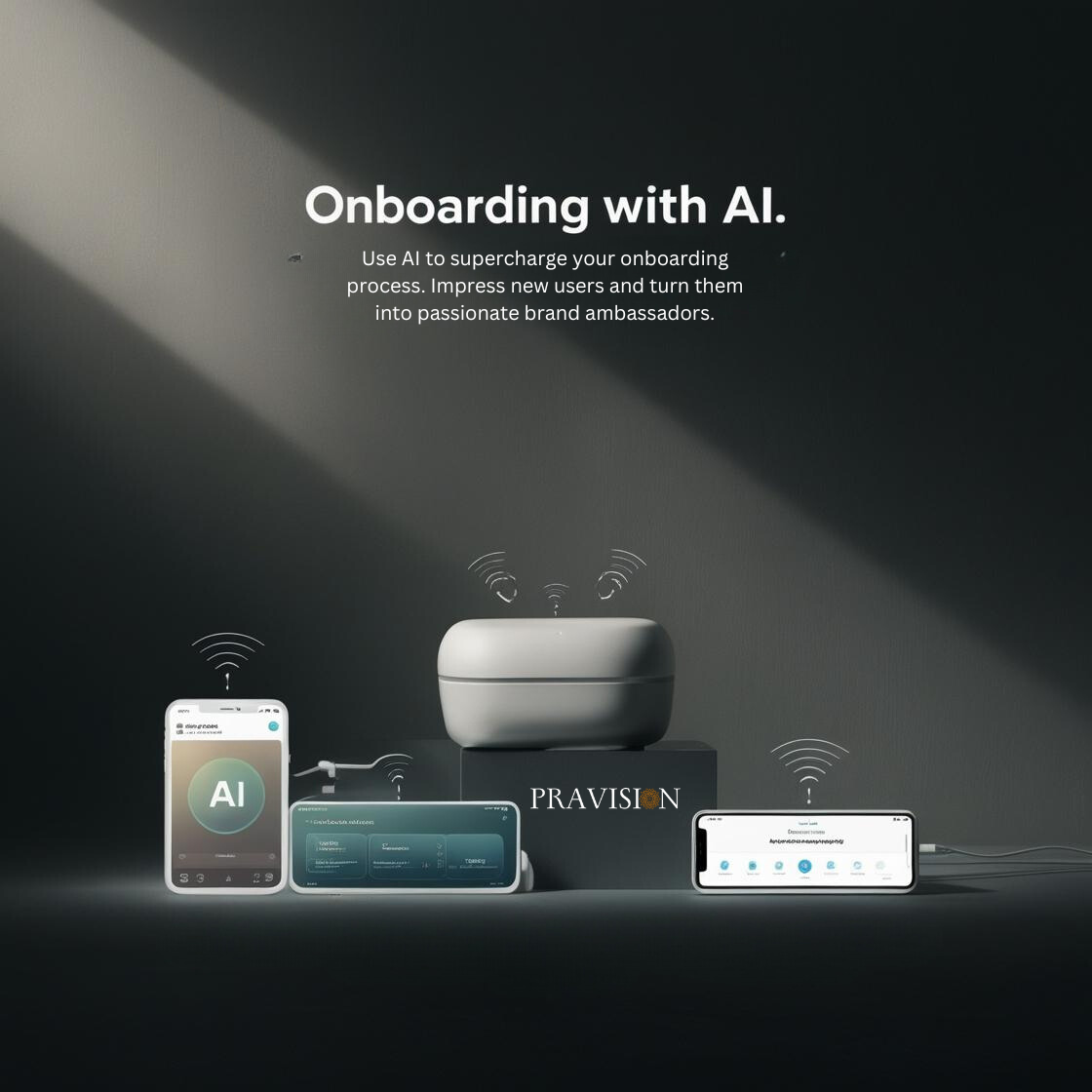
Remember that awesome customer onboarding experience we talked about? You know, the one where you wow new users from the get-go and turn them into loyal advocates? Well, get ready to take it to the next level with the power of AI!
Want a refresher on the fundamentals of customer onboarding? Check out my previous blog post, Level Up Your Customer Onboarding: The Ultimate Guide to Success (with Cheat Sheets!), for a comprehensive overview of onboarding best practices. You can find it here: Level Up Your Customer Onboarding: The Ultimate Guide to Success
Now, let’s dive into how AI can supercharge your onboarding process…
Artificial intelligence is changing the game when it comes to onboarding. It’s like having a super-smart assistant who can anticipate your users’ needs and guide them seamlessly through their journey. This isn’t just about making things easier for your customers (though that’s a huge plus!); it’s about creating an experience so personalized and engaging that they can’t help but fall in love with your product.
Why AI-Powered Onboarding Rocks
Happy Customers, Happy Business: AI helps you deliver a smooth, efficient onboarding experience that reduces frustration and increases satisfaction. Happy customers are more likely to stick around, become repeat buyers, and spread the word about your amazing product.
Boost Engagement and Retention: By personalizing the onboarding journey and providing proactive support, AI helps you keep users engaged and motivated, ultimately reducing churn and increasing customer lifetime value.
Free Up Your Team (and Empower Them!): AI takes care of those tedious, repetitive tasks, like data entry and basic troubleshooting. This doesn’t mean replacing your team! Instead, it frees them up to focus on what they do best: building relationships, providing personalized guidance, and coming up with creative solutions. Think of AI as an extension of your team, not a replacement.
Remember: The human touch is still key! AI is a powerful tool, but it can’t replace the empathy, intuition, and genuine connection that human interaction provides.
How AI Transforms the Onboarding Experience
Personalized Onboarding Paths:
Imagine this: a new user signs up for your product, and instead of being thrown into a generic onboarding flow, they’re greeted with a personalized experience tailored to their specific needs and goals. AI makes this possible!
By analyzing user data like demographics, past behavior, and stated preferences, AI can create customized onboarding paths that deliver the most relevant information and features at the right time. This means users get up to speed faster, experience quicker wins, and see the value of your product sooner.
Think of Duolingo, the language learning app. It uses AI to assess your current language skills and create a personalized learning path that adapts to your progress. This ensures you’re always challenged but not overwhelmed, keeping you motivated and engaged.
AI-Powered Chatbots and Virtual Assistants (Like Pravision Bot!):
No more waiting around for support! AI-powered chatbots and virtual assistants are like having a 24/7 concierge for your users. They can answer questions instantly, troubleshoot issues, and guide users through the onboarding process in a conversational and engaging way.
Take Pravision Bot, for example. It can automatically capture customer emails, extract key information, and even log support tickets without any human intervention. This means faster response times, reduced workload for your team, and happier customers.
These AI assistants can also proactively reach out to users who seem stuck or confused, offering helpful tips and resources. This reduces frustration, prevents drop-offs, and ensures a smooth onboarding journey.
Automated Tasks and Workflows:
Say goodbye to manual data entry and tedious setup processes! AI can automate many of the repetitive tasks involved in onboarding, such as:
Account creation and setup: AI can automatically populate user profiles with information gathered during signup, saving time and reducing errors.
Product tours and tutorials: AI can guide users through interactive product tours, highlighting key features and functionalities based on their individual needs.
Data import and migration: AI can seamlessly import data from other platforms, making the transition to your product smooth and effortless.
This automation frees up your customer success team to focus on more strategic tasks, like building relationships, providing personalized guidance, and identifying opportunities for upselling and expansion.
Predictive Analytics for Proactive Intervention:
AI can analyze user behavior and identify those who might be struggling or at risk of churning. This allows your customer success team to intervene proactively and offer personalized support before it’s too late.
For example, if a user hasn’t logged in for a while or hasn’t completed key onboarding steps, AI can trigger an automated email or a personalized message from a customer success manager, offering assistance and checking in on their progress.
This proactive approach shows users that you care and are invested in their success, increasing their satisfaction and loyalty.
Content Optimization with AI:
AI can analyze user interactions with your onboarding materials (tutorials, videos, knowledge base articles) and identify areas for improvement. This could include:
Content recommendations: AI can suggest relevant content to users based on their individual needs and learning styles.
Format optimization: AI can identify which formats (text, video, interactive) are most effective for different user segments.
Personalized messaging: AI can tailor onboarding messages and notifications to resonate with individual users.
By continuously optimizing your onboarding content, you can ensure it’s always engaging, relevant, and effective.
Gamification and AI:
Make onboarding fun and rewarding with AI-powered gamification! AI can personalize the gamified experience by offering tailored challenges, rewards, and incentives based on user preferences and progress.
This can include:
Personalized badges and achievements: AI can award badges based on specific milestones achieved during onboarding.
Tailored challenges and quests: AI can create challenges that align with user goals and interests, keeping them motivated and engaged.
Personalized feedback and encouragement: AI can provide feedback and encouragement based on user performance, fostering a sense of accomplishment and progress.
Real-World Examples
LinkedIn: Uses AI to suggest relevant connections, job opportunities, and learning resources to new users based on their profile and interests. This helps them quickly build their network and get the most out of the platform.
Facebook: Employs AI to personalize the newsfeed for new users, showing them content that is most relevant to their interests and connections. This helps them feel immediately engaged and encourages them to explore the platform further.
The Human Touch Still Matters
While AI is a powerful tool for customer onboarding, it’s important to remember that the human touch is still crucial. AI should be used to enhance, not replace, human interaction.
Your customer success team should be there to provide personalized support, build relationships, and offer strategic guidance. AI can free up their time to focus on these high-value activities, creating a truly exceptional onboarding experience.
Need Help with AI-Powered Onboarding?
If you’re looking to implement AI in your customer onboarding process and need advice, guidance, or a helping hand, reach out to us at Pravision. We’re here to help you create an onboarding experience that truly wows your customers!
As Praveena says, “Customer Rocks!” Let’s work together to make your customers rockstars too.
Ready to Get Started?
AI-powered onboarding is the future of customer success. By embracing these technologies, you can create an onboarding experience that delights your users, boosts engagement, and drives long-term loyalty.
So, what are you waiting for? Start exploring the possibilities of AI and take your customer onboarding to the next level!
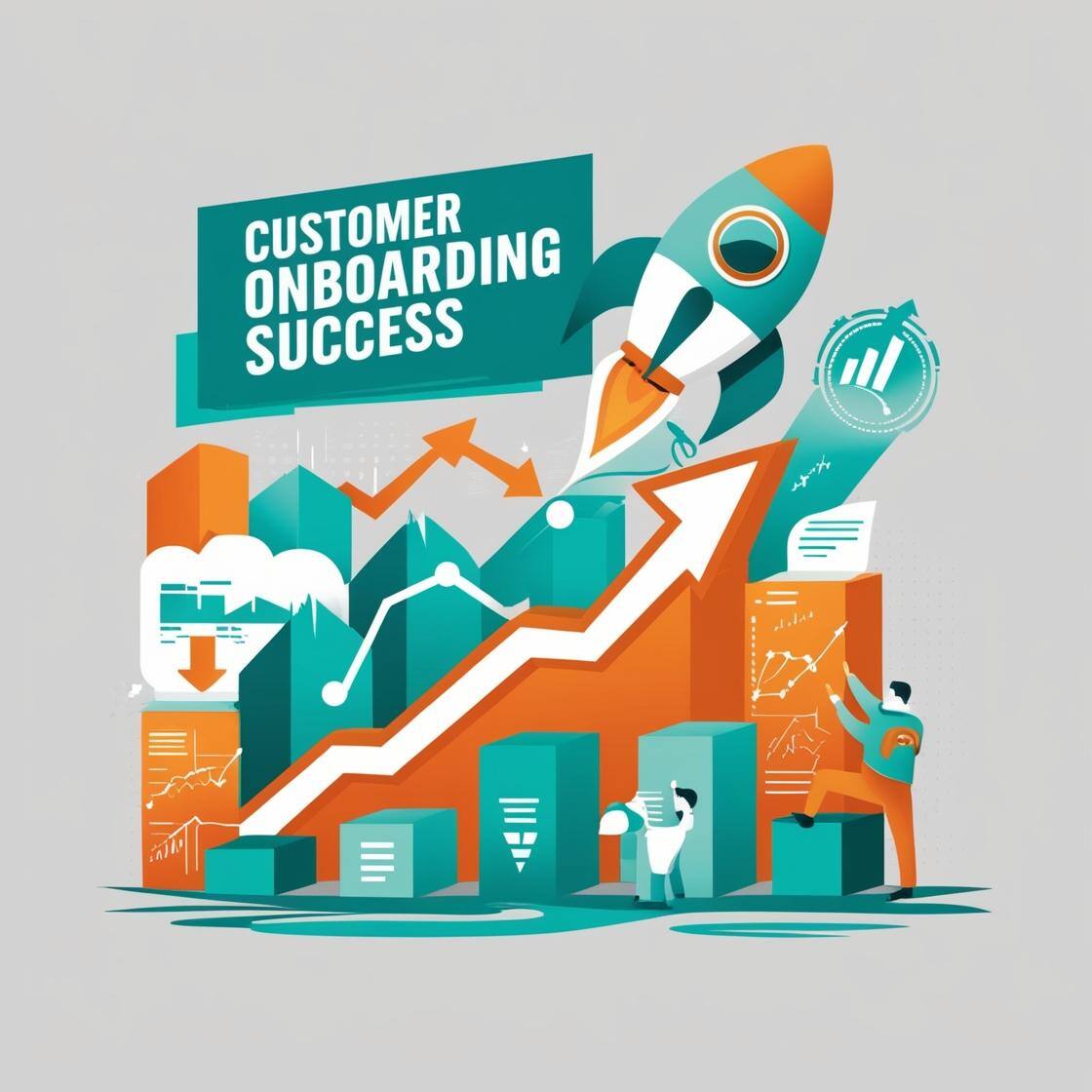
Customer onboarding. It’s more than just a welcome email. It’s the VIP treatment, the red carpet rollout that sets the stage for my customer’s entire experience. Nail it, and you’ll see increased engagement, reduced churn, and happier customers.
Let’s face it, most photographers follow a predictable formula: pose the subjects, snap the shot, and apply some basic editing. But what if you crave something more? Something that truly reflects your unique personality and style? And what if you’re tired of feeling like you have to fit into a certain mold to look good in photos?
That’s where PJ4Ever Photography, helmed by the visionary Praveena Ane Nenu, steps in. Praveena understands that your photos should be as individual as you are, and that true beauty comes in all shapes, sizes, and forms.
Here’s how PJ4Ever Photography stands out from the crowd:
Feature
Typical Photographers
PJ4Ever Photography
Posing
Stiff, traditional poses. Everyone lined up or sitting awkwardly.
Dynamic and natural poses that capture genuine emotion and interaction.
Angles
Straight-on, predictable angles.
Creative angles that add depth and visual interest. Think high angles, low angles, and unique perspectives.
Lighting
Reliance on natural light or basic flash.
Masterful use of light and shadow to create mood and drama.
Colors
Standard color correction for brightness and clarity.
Emphasis on vibrant colors and creative color grading to enhance the mood and story.
Editing
Basic Photoshop edits for touch-ups.
A blend of artistic techniques and effects to create truly unique and stylized images.
Overall Result
Generic photos that look like everyone else’s.
One-of-a-kind images that tell your story in a captivating way.
We often use the terms “leadership” and “management” interchangeably, but are they truly the same? While both are crucial for organizational success, they involve distinct mindsets, skillsets, and focuses. Let’s break down the key differences:
We throw around terms like “CX” and “NPS” like confetti in the customer experience world. But let’s be honest, sometimes it’s hard to keep them all straight!
In today’s competitive business environment, it’s more important than ever to provide excellent customer experience. And one of the most important aspects of a positive customer experience is politeness.
What is politeness? It’s the act of being courteous and respectful to others. It’s about showing kindness, consideration, and empathy. In the context of customer experience, politeness means treating customers with respect throughout their entire journey with your company, even when they are difficult or demanding.
Why is politeness so important? There are many reasons. It builds trust and rapport with customers. When customers feel like they are being treated with respect, they are more likely to trust the company and do business with them again. Politeness can also help to de-escalate conflict. When customers are upset or angry, politeness can help to calm them down and resolve the situation peacefully.
Think about it: politeness makes customers feel valued and appreciated. When customers feel like they are important to a company, they are more likely to be loyal customers. It’s simple but powerful.
Here’s a personal example: I’ve been going to the same Indian grocery store for decades. Even after I moved to a different location, I still make the drive to that specific store. Why? It’s not just about the price, cleanliness, or variety of products (though those are important too!). It’s about the way they treat their customers. They always greet me with a smile, offer to help me find things, and make me feel like a valued customer. That’s what keeps me coming back. That positive experience keeps me loyal.
This doesn’t just apply to grocery stores, either. It applies to all types and sizes of companies. Whether you’re a small business owner or a large corporation, politeness is essential for building strong customer relationships.
And guess what? Even AI is getting in on the act!
Artificial intelligence is increasingly playing a role in enhancing the customer experience. Here’s how:
AI-powered chatbots: These can provide instant support, answer common questions, and even resolve simple issues, all while maintaining a polite and helpful demeanor.
Personalized recommendations: AI can analyze customer data to offer tailored product suggestions or solutions, making the customer feel understood and valued.
Sentiment analysis: AI can help identify customer emotions in real-time, allowing companies to respond appropriately and de-escalate potentially negative situations.
By combining the strengths of AI with the human touch of mindful customer service, companies can create truly exceptional experiences for their customers.
How can businesses improve politeness in their customer experience?
Here are a few tips:
Train employees on the importance of politeness.
Set clear expectations for politeness in all customer interactions.
Provide feedback to employees on their level of politeness.
Recognize and reward employees who are consistently polite to customers.
By following these tips, businesses can create a more positive customer experience and build stronger relationships with their customers.
Remember: Politeness is an essential part of a great customer experience. It’s about treating customers with respect, kindness, and consideration. By being polite, businesses can build trust, de-escalate conflict, and make customers feel valued.